
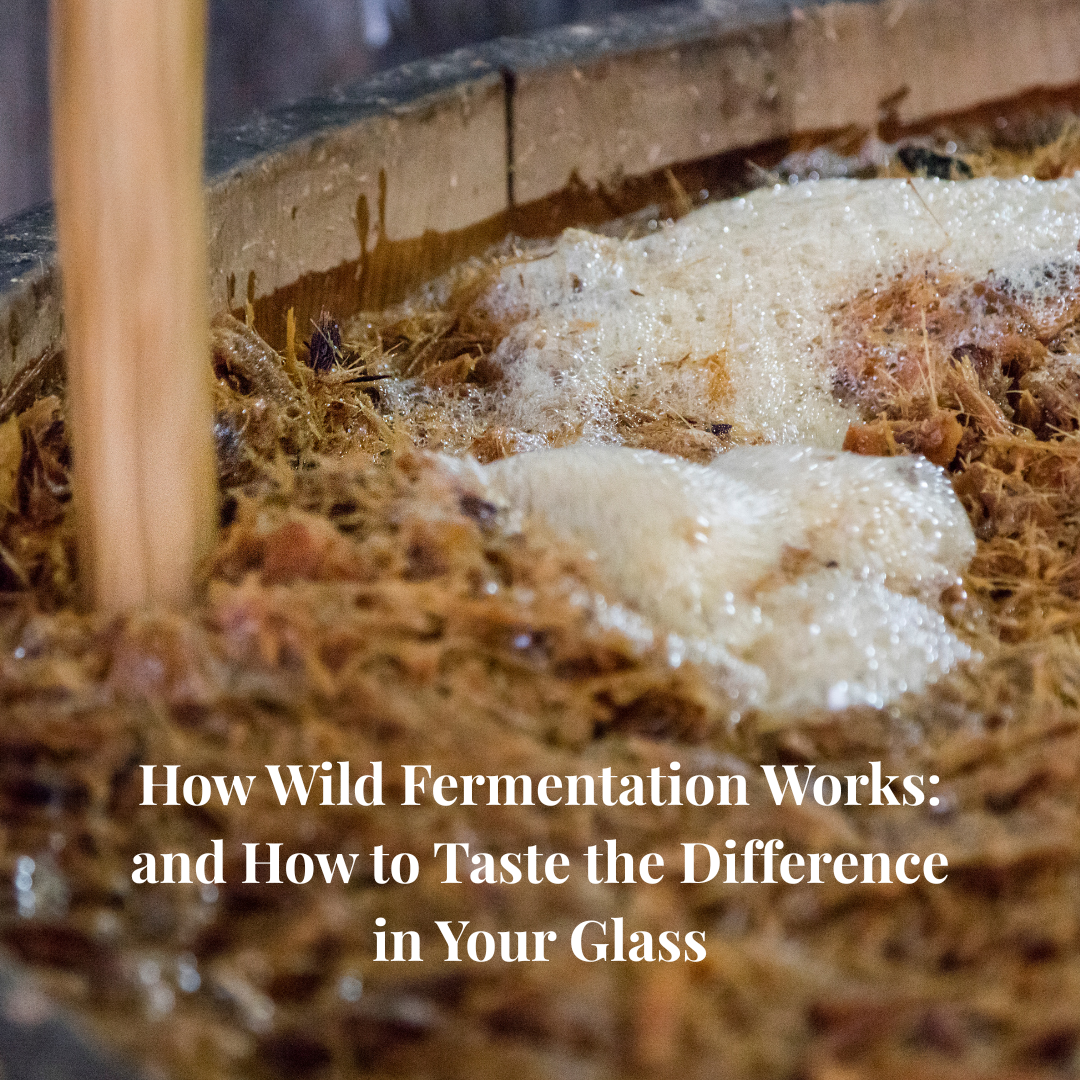
Before any agave spirit reaches your lips, something extraordinary has to happen. The sugars extracted from roasted or steamed agave heart must be converted into alcohol, and the character of that conversion shapes everything you will eventually taste. Distillers have two broad choices: inoculate the must with a commercially propagated yeast strain and get predictable, efficient fermentation, or open the process up to the microbial world and let nature decide who shows up to the party. The second path is called wild fermentation, spontaneous fermentation, or, in Spanish, fermentacion natural. It is older than the industry itself, and it is responsible for some of the most arresting flavors in the agave spirits category.
What Wild Fermentation Actually Means
Wild fermentation is not a single event. It is an ecological succession. When a maestro or maestra opens up a fermentation vessel filled with freshly extracted agave juices, the liquid is immediately colonized by whatever microorganisms are present in the local environment: on the agave itself, on the tools used to extract it, in the air of the palenque or taberna, on the hands and clothing of the workers. That community includes wild yeasts from dozens of genera, lactic acid bacteria, acetic acid bacteria, and other organisms whose roles are still being studied.
In the early hours, bacteria often dominate. Lactic acid bacteria consume some sugars, lower the pH of the must, and produce lactic acid, acetic acid, and a range of aromatic compounds. As the pH drops and competition intensifies, more alcohol-tolerant wild yeasts begin to assert themselves. Saccharomyces cerevisiae, the same species used in commercial production, is typically among them, but it shares the stage with Saccharomyces uvarum, various Hanseniaspora, Pichia, Lachancea, Torulaspora, Metschnikowia, and Kluyveromyces species, among others. Each of these organisms contributes its own metabolic byproducts to the mix.
What emerges from this competition and cooperation is a fermentation that can take days, weeks, or even longer depending on temperature, the sugar content of the agave, water quality, vessel material, and the local microbial community. Commercial fermentation with selected yeast strains typically completes in two to four days. Wild fermentations in traditional production facilities frequently run seven to twelve days, and some producers report ferments that stretch beyond three weeks.
The Role of the Vessel
The fermentation vessel is not passive. It is a reservoir of microbial memory. Producers who ferment in open-air wooden vats, or tinas, are working with vessels that have been inoculated over years or decades of continuous use. The wood grain harbors microorganisms that contribute to fermentation each time the vessel is filled. This is one reason why the same producer making the same agave in the same way can still produce mezcal with a distinct character that resists replication elsewhere: the tinas themselves are part of the recipe.
Producers who use animal hides stretched over a wooden frame, or who ferment directly in carved stone or in the hollowed trunk of a tree, are each working with microbial communities that exist nowhere else. Some Oaxacan producers still conduct fermentation in bovine or equine hides, and the specific flora that colonize those hides contribute recognizable flavors to the finished spirit. Whether that origin is perceptible to most drinkers is a separate question, but researchers who have studied traditional mezcal fermentation have documented that microbial diversity in these older vessels is substantially higher than in stainless steel or purpose-built plastic containers.
Where the Flavors Come From
Fermentation does not simply convert sugar to ethanol and carbon dioxide. It is also the primary factory for the congeners, organic compounds other than ethanol that give a spirit much of its aromatic and flavor complexity. Esters, fusel alcohols, aldehydes, organic acids, and a large group of compounds called volatile phenols are all produced during fermentation, and the specific community of organisms doing the work determines which of these compounds are made, in what quantities, and in what ratios.
Esters are among the most important flavor-active compounds in agave spirits. They form when alcohols react with organic acids, and they carry fruity, floral, and sometimes solvent-like aromas. Ethyl acetate, the most common ester in fermented beverages, has a profile that ranges from pleasant and fruity at low concentrations to sharp and nail-polish-like at high ones. Isoamyl acetate smells like banana. Ethyl hexanoate suggests apple and anise. Wild fermentations with diverse non-Saccharomyces populations tend to produce a wider range of esters and at different concentration ratios than single-strain inoculated fermentations.
Organic acids produced during fermentation affect both flavor and pH. Lactic acid, associated with the bacterial phase of wild fermentation, contributes a soft, creamy, slightly sour quality. Acetic acid, at low concentrations, adds vinegar-like lift and complexity. Succinic acid brings a persistent, slightly bitter umami-adjacent quality that some drinkers describe as meaty or savory. These acids also interact with other compounds throughout distillation and aging to continue producing esters.
Fusel alcohols, sometimes called higher alcohols, are produced as yeast metabolize amino acids. Compounds like isoamyl alcohol, isobutanol, and propanol carry heavier, oilier aromatic profiles. At the right concentrations they add body and complexity; at high concentrations they contribute the solvent-like heat associated with poorly made spirits. Wild fermentations do not automatically produce more fusel alcohols, but the specific community of organisms involved can shift the balance of these compounds relative to what single-strain fermentation produces.
Terroir, Biology, and the Limits of Replication
The term terroir is borrowed from wine and applied with increasing frequency to agave spirits. It is a useful shorthand for the idea that place influences flavor, but it can obscure more than it reveals if deployed too casually. In the context of fermentation, what we mean by terroir is largely biological: the specific microbial community present in a given location reflects the local vegetation, climate, soil organisms, and the accumulated microbial history of the production facility. When a maestro in San Luis Potosi harvests Agave salmiana, cooks it in an underground earthen oven, and ferments it in open tinas under a corrugated metal roof, the resulting spirit carries the chemical signature of that particular place in a way that cannot be fully separated from any single step in the process.
This is why attempts to replicate traditionally made mezcal in industrial settings using commercial yeast strains and controlled fermentation tanks have consistently fallen short. The biology is not a variable that can be isolated and reproduced on command. Research published in peer-reviewed food science and microbiology journals over the past decade has demonstrated that the microbial diversity in traditional mezcal production facilities is not only high but geographically distinctive. Samples taken from palenques in different municipalities, even within the same state, show measurably different microbial populations. Those differences map onto measurable chemical differences in the fermented musts, and, ultimately, into flavor differences in the finished spirits.
How to Taste the Difference
Knowing the science is one thing. Being able to identify wild fermentation character in a glass is the more practically useful skill. No single aromatic or flavor marker definitively indicates wild fermentation, but there are clusters of qualities that experienced tasters associate with it.
Start with the nose. Wild-fermented mezcals and other traditionally produced agave spirits often show a more complex aromatic profile than their commercial-yeast counterparts. Look for layered fruit notes that do not resolve into a single identifiable fruit, for funk that ranges from mild ripe banana to more assertive tropical and fermented notes, and for a subtle lactic or creamy quality that reads as richness on the nose rather than sourness. Some will show a mild Brett-like barnyard character, which comes from specific yeast metabolites. Others carry floral notes that industrial fermentation tends to suppress.
On the palate, wild-fermented spirits tend toward textural complexity. The acids produced during the bacterial phase of fermentation give the spirit a different weight and persistence than ethanol and agave flavor alone would produce. You may notice a slight tartness that brightens the mid-palate, a savory or umami quality in the finish, or a long, evolving aftertaste that shifts through several distinct phases. The finish on well-made wild-fermented mezcal is often one of its most distinguishing features: it lingers, and it changes.
Compare this profile to a mezcal or tequila made with commercial yeast under controlled fermentation conditions. These spirits often show cleaner, more linear aromatic profiles. The agave character tends to be more immediately legible, without the layered complexity that wild fermentation introduces. That is not a criticism: clarity and precision are legitimate production goals, and some of the world’s finest agave spirits are made with selected yeast strains. But the comparison is instructive. When you pour both in the same session, the differences in aromatic architecture become apparent.
A Practical Tasting Framework
When you encounter a new agave spirit and want to assess whether wild fermentation may be a factor in its character, consider working through these steps:
Nose the spirit in a tulip-shaped glass at room temperature, without any dilution. Give it at least two minutes to open. Note whether the aromatic profile resolves into something simple and focused, or whether it continues to reveal new notes over time. Wild fermentation character tends to be dynamic.
Add a small amount of room-temperature water, roughly five to ten percent of the volume in the glass, and nose it again. Water can dramatically open up ester compounds that were suppressed at full strength. If the fruit and floral notes increase significantly after dilution, you may be looking at a high-ester fermentation profile.
Take a small sip and hold it in your mouth for several seconds before swallowing. Focus on texture first, then flavor. Does the spirit feel thin, medium, or full? Is there an acidic brightness that appears in the mid-palate? Does the flavor profile shift from entry to mid-palate to finish, or does it remain consistent throughout?
Pay close attention to the finish. Time it. Wild-fermented mezcals routinely show finishes exceeding ninety seconds in well-made expressions, and the flavor often evolves through at least two or three distinct phases during that time. A finish that shifts from sweet to savory to herbal, or from fruity to earthy, suggests a congener profile more complex than single-strain fermentation typically produces.
What the Labels Won’t Tell You
Despite its importance to flavor, fermentation method is not reliably disclosed on agave spirit labels. Mezcal Artesanal and Mezcal Ancestral categories under the current Norma Oficial Mexicana for mezcal require certain production methods but do not mandate disclosure of yeast source. Tequila regulations do not require fermentation method disclosure at all. Some producers voluntarily indicate wild or spontaneous fermentation on their labels, and some importers highlight it in their marketing materials, but the absence of such disclosure should not be read as evidence of commercial-yeast fermentation any more than its presence should be taken at face value without supporting information.
The most reliable approach is to ask questions. Many producers who practice wild fermentation are proud of it and will discuss their process in detail. Importers and distributors who specialize in traditionally made spirits usually have access to production notes. And your own palate, trained through deliberate comparative tasting, is ultimately the instrument that matters most.
The Biological Argument for Tradition
Wild fermentation persists in traditional agave spirit production not because producers are unaware of alternatives, but because many of them understand, in practical terms, that it produces something commercially propagated yeast cannot fully replicate. The accumulated microbial knowledge embedded in a well-used wooden fermentation vat, or in the open-air environment of a palenque in a particular valley, is a resource that took generations to develop and that can be lost in a single season of abandonment.
For the consumer, this means that a traditionally fermented mezcal or other agave spirit is not simply a product. It is a snapshot of a specific microbial ecosystem at a specific moment in time, shaped by geography, climate, agave variety, and human practice. That is a reasonable definition of irreproducible character, and it is exactly what the best wild-fermented agave spirits deliver. If you know what to look for in your glass, you can taste the proof.