
If you have tasted a well-made tobalá mezcal, you probably remember the moment. There is something about the spirit that stops you mid-sip and asks you to pay attention. The aromatics are layered and unusual. The palate has a mineral backbone that most agave spirits never reach. The finish lingers in a way that rewards patience. And the price tag, which can easily run two or three times the cost of a comparable espadin, suddenly feels less like a luxury markup and more like a reflection of what it actually took to get that liquid into the bottle.
Tobalá is not just another agave varietal. It is one of the most celebrated wild agaves in the mezcal world, and for good reason. But the story behind the plant is more complicated than the tasting notes suggest. To understand tobalá, you need to understand where it grows, how long it takes to mature, why it yields so little spirit, and what its popularity means for the wild agave populations that remain.
The Basics: What Is Tobalá?
Tobalá is the common name for Agave potatorum, a species of agave that grows wild across the highlands of Oaxaca and parts of Puebla, Guerrero, and Michoacán. The botanical name comes from the Latin word for “drinker,” which is fitting for a plant so closely associated with distilled spirits. In Zapotec, the name tobalá roughly translates to “agave of the gods” or “agave of the mountain,” depending on the community and the dialect. Either way, the name carries a reverence that other agave varietals rarely receive.
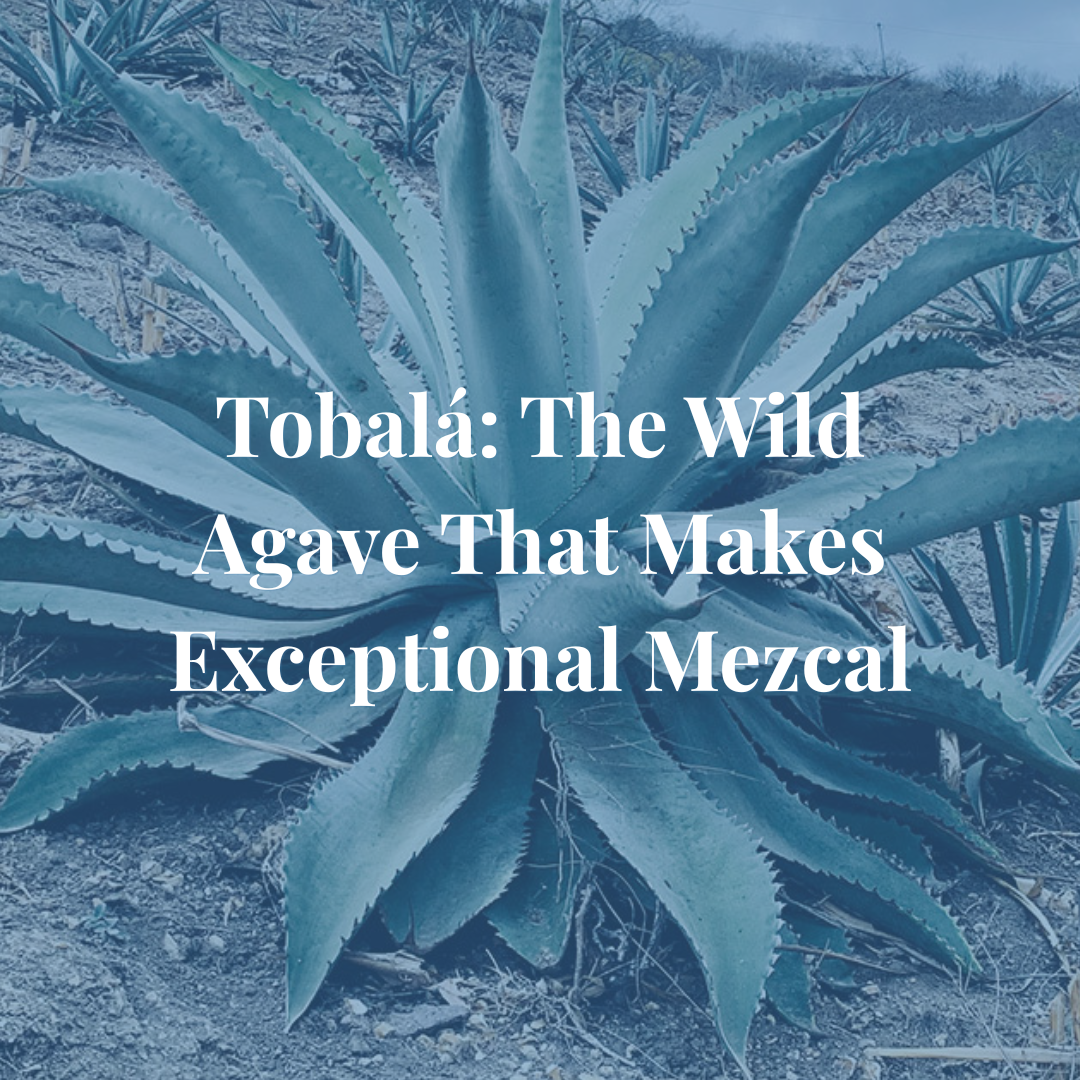
The plant itself is relatively small compared to the agaves most drinkers are familiar with. Where a mature espadin can weigh 80 to 150 kilograms at harvest, a tobalá piña typically weighs between 10 and 30 kilograms. Its rosette of thick, spoon-shaped leaves is compact and symmetrical, and the leaves are shorter and wider than those of most other mezcal agaves. If you see one growing on a rocky hillside among oak and pine forest, it is easy to spot once you know what to look for.
Tobalá grows at elevations typically ranging from 1,500 to 2,500 meters above sea level. It favors thin, rocky, calcareous soils on steep slopes where drainage is excellent and other plants struggle to compete. It does not grow in rows in cultivated fields. It grows where the mountain puts it, scattered among boulders, tucked into crevices, and anchored to terrain that would defeat most agricultural ambitions. This is a wild agave, and its wildness is fundamental to its character.
Growth, Maturation, and the Patience It Demands
One of the defining characteristics of tobalá is how long it takes to reach maturity. Most producers report harvest timelines between 10 and 15 years, with some plants in higher, drier locations pushing toward 18. Compare that to espadin, which typically matures in six to eight years under cultivation, and you begin to see why tobalá bottles carry the prices they do.
During those years of slow growth, the plant is doing something important. It is accumulating sugars, absorbing minerals from the rocky substrate it calls home, and developing the complex chemical precursors that will eventually translate into flavor. Longer maturation generally means more concentrated sugars and more nuanced flavor compounds. This is why rushed harvests produce thinner, less interesting spirits across all agave species, and it is especially true for tobalá, where the margin between a good harvest and a mediocre one is narrower than most.
Tobalá does not produce offsets or hijuelos the way espadin does. It reproduces almost exclusively by seed, which means it depends on pollinators, primarily bats from the genus Leptonycteris, to carry pollen from one plant’s quiote to another. If the plant is harvested before it sends up its flowering stalk, those seeds are never produced. This single biological fact is the source of nearly every sustainability concern around tobalá production.
Flavor: What Makes Tobalá Mezcal Distinctive
The flavor profile of a well-made tobalá mezcal is unlike anything else in the category. Where espadin tends toward sweet, honeyed, roasted notes with a rounded mouthfeel, tobalá pushes in a different direction. The aromatics often open with tropical fruit, sometimes mango, sometimes guava, layered over a floral quality that can suggest jasmine or gardenia. There is often a distinct minerality, chalky and clean, that comes from the limestone-heavy soils where the plant grows. On the palate, you may find wild herbs, green apple, a subtle nuttiness, and a persistent earthiness that grounds the brighter fruit notes.
The finish is where tobalá separates itself most clearly. A good tobalá has length. It stays with you, evolving over 30 seconds or more, revealing layers that were not immediately obvious on the first sip. This persistence is partly a function of the higher concentration of flavor compounds in the smaller piña, and partly a function of the specific terroir where the plant grew. Two tobalá mezcals from different parts of the same mountain range can taste noticeably different, which is one of the great pleasures and frustrations of the category.
It is worth noting that tobalá’s relatively small piña yields far less distillate per plant than espadin. A maestro mezcalero might get four or five liters of finished spirit from a single tobalá, compared to 10 or more liters from a mature espadin. When you factor in the longer maturation time, the lower yield, and the labor involved in harvesting wild plants from steep mountain terrain, the economics start to tell their own story.
Harvesting Wild Tobalá: The Work Behind the Bottle
Harvesting tobalá is not like harvesting cultivated espadin. There are no neat rows to walk. There is no truck parked at the edge of a flat field. Harvesting tobalá means hiking into rough mountain terrain, sometimes for hours, to reach the scattered plants. The harvesters, often the mezcalero and one or two family members or helpers, carry machetes, a coa (the curved blade used to trim the leaves), and sometimes a mule or burro to haul the piñas back down.
The work is physically demanding and requires real knowledge of the land. Experienced harvesters know where the tobalá grows on their particular mountain. They know which plants are approaching maturity and which ones need another year or two. They make decisions in the field about which plants to take and which to leave, and those decisions have consequences that extend years into the future. A harvester who takes too many plants from one area, or who consistently cuts plants before they flower, is drawing down a natural resource that replenishes itself slowly.
Once the piñas are brought back to the palenque, the production process follows the same general arc as other traditional mezcals. The piñas are roasted in an earthen pit oven, crushed (often by tahona or hand with wooden mallets), fermented in open-air vats with ambient yeasts, and double-distilled in clay or copper pot stills. But the smaller piña size means smaller batch volumes, which means less room for error. Every step matters more when you are working with limited raw material that took over a decade to grow.
The Sustainability Question
This is the part of the tobalá story that the industry does not talk about enough. Wild tobalá populations are under pressure. The plant’s growing popularity, combined with its slow maturation, its dependence on seed reproduction, and the pre-flowering harvest that most mezcal production requires, has created a sustainability problem that is difficult to solve without changing how the industry operates.
When a tobalá is harvested before it flowers, that plant produces zero seeds. Multiply that across thousands of harvests per year, and you get a declining wild population. Some communities in Oaxaca have already reported that tobalá is harder to find than it was 15 or 20 years ago. Others have begun informal conservation practices, leaving a percentage of mature plants to flower and set seed before harvesting the rest. But these efforts are community-driven and uneven, and there is no overarching regulatory framework that requires them.
Cultivation efforts exist, but they come with trade-offs. Some producers and conservation groups have begun growing tobalá from seed in nurseries and transplanting seedlings into appropriate terrain. This is promising, but the plants still take a decade or more to mature, and there is an ongoing debate about whether cultivated tobalá, grown in managed conditions rather than wild hillside terrain, will produce spirit with the same depth of flavor that the wild plants deliver. The terroir argument is not merely romantic. The specific soil chemistry, elevation, sun exposure, and competing vegetation of a wild growing site all contribute to the plant’s flavor profile. Remove those variables, and you may remove part of what makes tobalá special.
As a consumer, the most responsible thing you can do is ask questions. Look for producers who talk openly about their sourcing practices. Ask whether they leave a portion of mature plants to flower. Ask whether they are involved in replanting or nursery programs. And understand that the price of a tobalá bottle, when it comes from a producer who is harvesting responsibly and paying fair wages, is not inflated. It is honest.
How to Taste Tobalá: Getting the Most From the Glass
If you are spending the money on a bottle of tobalá mezcal, you owe it to yourself to taste it properly. That means neat, at room temperature, in a copa or wide-mouthed glass that lets the aromatics open up. No ice. No mixer. Not yet, anyway.
Give it time before your first sip. Let the spirit sit in the glass for a minute or two after pouring. Tobalá mezcals often reveal their full aromatic complexity gradually, and the first impression from a freshly poured glass can be dominated by alcohol heat, especially at higher proofs. After a short rest, bring the glass to your nose at chin level rather than directly under your nostrils. You will pick up more nuance and less burn.
On the palate, let the spirit coat your tongue before you start cataloging flavors. The minerality, which is tobalá’s signature, often shows up as a textural quality before it registers as a specific taste. Pay attention to the finish, because that is where the story gets interesting. A good tobalá will shift and evolve in the aftertaste, revealing fruit, herbs, smoke, and earth in a sequence that is unique to each batch.
Once you have tasted it neat and given it the attention it deserves, feel free to add a few drops of water if you like. Some tobalá mezcals open up beautifully with dilution, and there is no shame in finding the proof that works best for your palate. The goal is engagement with the spirit, not endurance.
What to Look for When Buying
The market for tobalá mezcal has grown considerably in the past decade, and not every bottle on the shelf is worth the asking price. Here are a few things worth paying attention to.
First, look for transparency on the label. The best tobalá producers identify the maestro mezcalero by name, list the specific community or region where the agave was harvested, and note the batch size and production details. If a label is vague about where the agave came from or who made the spirit, treat that as a yellow flag.
Second, check the proof. Many of the most compelling tobalá mezcals are bottled at higher proofs, often between 45 and 50 percent ABV, because that is where the full range of flavor compounds is best preserved. Spirits diluted below 40 percent ABV can lose some of the aromatic complexity and textural richness that make tobalá worth seeking out.
Third, be realistic about price. A genuine, small-batch, wild-harvested tobalá mezcal from a responsible producer is going to cost more than an espadin. If you find a tobalá at a suspiciously low price point, ask yourself what corners were cut to get it there. The economics of this agave simply do not support bargain pricing without compromise somewhere in the chain.
The Bigger Picture
Tobalá occupies a particular place in the mezcal world. It is a wild agave that produces exceptional spirit when handled with care and patience. It is also a plant under real pressure from its own popularity, a situation that demands more thoughtfulness from producers, brands, and consumers than the industry has historically provided.
The best tobalá mezcals are worth every cent they cost. They are some of the most complex, rewarding spirits produced anywhere in the world, and they carry in their flavor the specific character of a mountain, a soil, and a decade of slow growth. But that quality comes from scarcity and from ecosystems that took centuries to develop. If we want tobalá to remain part of the mezcal story for generations to come, the way we source it, produce it, and consume it has to reflect the kind of respect the plant has always deserved.