
There is a difference between ordering an agave cocktail and understanding one. Any bar can pour tequila over ice with lime. But the drinks on this list reward curiosity. Each one is a small education in what agave spirits can do when treated with respect, whether that means showcasing the clean minerality of a highland blanco or letting the smoke of a San Luis del Rio mezcal carry both flavor and structure.
These are not obscure competition drinks or historical curiosities dusted off for novelty. They are the cocktails that have shaped how bartenders and consumers think about agave, and mastering them gives you a framework for understanding virtually everything else. Learn these seven, and you will have a working vocabulary that covers everything from a dive bar in Tequila, Jalisco, to the cocktail programs at the most serious mezcalerias in the country.
A few notes before we start: mastering a cocktail here means more than memorizing ratios. It means understanding why the ratios exist, which agave spirit to reach for and why, and what to listen for in the glass when something is off.
1. Tommy’s Margarita
If you are only going to carry one agave cocktail in your head for the rest of your life, make it this one.
Julio Bermejo developed the Tommy’s Margarita at his family’s restaurant, Tommy’s Mexican Restaurant in San Francisco, in the early 1990s. His goal was straightforward: remove the orange liqueur that dominates a classic Margarita and replace it with agave nectar diluted with water, letting the tequila itself carry the drink. The result changed how the industry thought about tequila cocktails.
The classic Margarita, for all its charms, often obscures the base spirit under layers of triple sec and sugar. Tommy’s strips that away. What you are left with is a drink that tastes primarily of tequila and lime, with agave nectar providing sweetness that harmonizes with the base spirit in a way orange liqueur simply cannot. A good Tommy’s with a quality blanco will show you more about that tequila than almost any other preparation.
The Recipe
2 oz blanco tequila
1 oz fresh lime juice
1/2 oz agave nectar (diluted 50/50 with water)
Combine in a shaker with ice. Shake well and strain over fresh ice into a rocks glass. Salt rim is optional.
What to Use
A highland blanco from Jalisco, something with the citrus-forward, mineral character that defines the style. The tequila is the star here, so do not use something you would not sip on its own.
2. Paloma
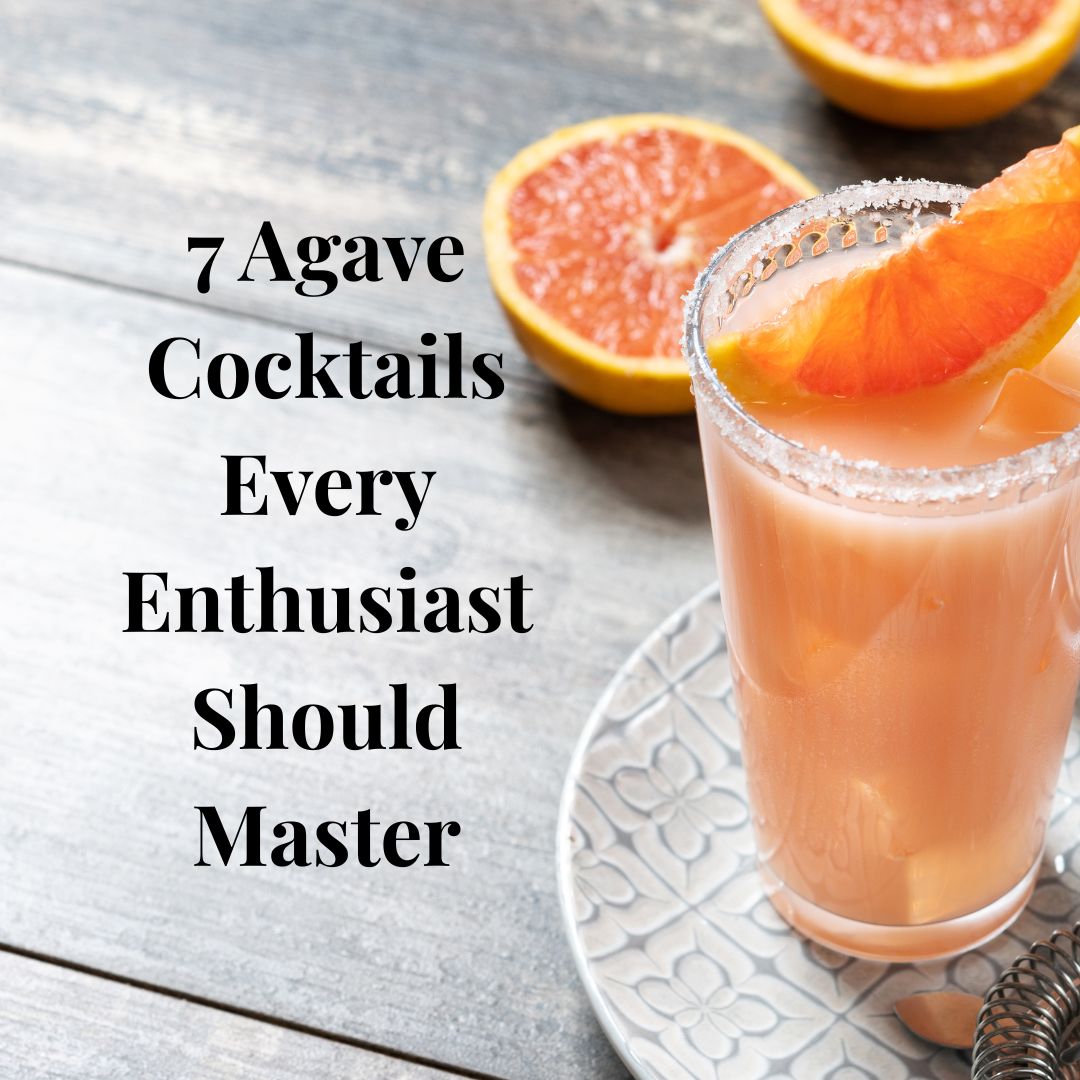
In Mexico, the Paloma outsells the Margarita by a wide margin. In the United States, it remains underappreciated, which means it also remains one of the best drinks you can order to quietly signal that you know what you are doing.
The Paloma’s exact origin is murky. Some attribute it to Don Javier Delgado Corona of La Capilla bar in Tequila, Jalisco, though the drink’s ubiquity in Mexico long predates any documented recipe. What is not disputed is that the traditional version is built in the glass with blanco tequila, fresh lime juice, a pinch of salt, and grapefruit soda, most traditionally Jarritos Toronja or Squirt. It is refreshing in a way that few cocktails can claim.
The Paloma is also forgiving. A good grapefruit soda carries weight, and the drink scales easily from casual to serious depending on how much attention you want to pay it. Fresh-squeezed grapefruit juice with a splash of club soda gets you a more complex, less sweet version. The salt is not optional.
The Recipe
2 oz blanco tequila
1/2 oz fresh lime juice
Pinch of kosher salt
Grapefruit soda to top (Jarritos Toronja, Squirt, or similar)
Build in a salt-rimmed highball glass over ice. Add tequila, lime juice, and salt. Top with grapefruit soda and stir gently.
What to Use
A blanco tequila with some weight and earthiness stands up better to the grapefruit than something light and delicate. Lowland expressions with vegetal, peppery character work particularly well here.
3. Oaxacan Old Fashioned
In 2007, bartender Phil Ward was working at Death & Co in New York City when he built a drink that would, without exaggeration, help launch mezcal into the consciousness of American cocktail culture. The Oaxacan Old Fashioned splits its base between reposado tequila and mezcal, sweetens with agave nectar, and finishes with Angostura bitters and a flamed orange peel.
What made this drink significant was not its technique. It was the idea of using mezcal not as a novelty but as a structural component, something that could carry weight in a stirred, spirit-forward drink. For many bartenders and drinkers in 2007, it was their first real encounter with mezcal as a serious spirit. A lot of careers in the agave industry can be traced, in some indirect way, back to this drink.
The split base is worth studying on its own. Reposado tequila provides the oak structure and cooked agave sweetness that an Old Fashioned format needs. Mezcal provides smoke and complexity. Together, they do something neither could do alone.
The Recipe
1.5 oz reposado tequila
0.5 oz mezcal (traditionally Del Maguey San Luis del Rio)
1 barspoon agave nectar
2 dashes Angostura bitters
Combine in a mixing glass with ice. Stir until well chilled and strain over a large ice cube in a rocks glass. Garnish with a flamed orange peel.
What to Use
The reposado matters. You want something with genuine barrel influence but not so much oak that it becomes clumsy. For the mezcal, lean toward an espadin from a village producer. The smoke should be present but should not overwhelm.
4. Naked and Famous
The Last Word is one of the great equal-parts cocktails, a Prohibition-era drink built on equal measures of gin, Green Chartreuse, Maraschino liqueur, and fresh lime juice. During his time at Death & Co, bartender Joaquin Simo reworked the formula by replacing gin with mezcal and Green Chartreuse with Yellow Chartreuse, and swapping Maraschino for Aperol. The result, the Naked and Famous, became one of the defining cocktail templates of its era.
What Simo understood is that mezcal’s smoky, savory profile could carry equal-parts construction in a way most spirits cannot. The smoke anchors the drink against the sweetness of Aperol and the herbal intensity of Yellow Chartreuse. The lime provides acid. Everything is in balance, and everything earns its place.
This is also an excellent drink to use as a teaching tool for yourself. Make it exactly as written, then adjust each component by small increments and taste what changes. You will learn more about cocktail balance in an hour than you would from reading three books on the subject.
The Recipe
3/4 oz mezcal
3/4 oz Yellow Chartreuse
3/4 oz Aperol
3/4 oz fresh lime juice
Combine in a shaker with ice. Shake well and strain into a coupe.
What to Use
An espadin mezcal with medium smoke works best here. Something too heavily peated will bulldoze the other components. Something too mild and the drink loses its personality.
5. El Diablo
The El Diablo does not get the attention it deserves, possibly because it is genuinely simple and the cocktail world has a weakness for complexity. The drink dates to at least the early 1940s and is attributed to Trader Vic’s, the tiki bar empire that introduced many Americans to rum and tropical drinks. That a tequila cocktail found its home in a Polynesian bar says something about how long agave spirits have occupied a peculiar, underappreciated corner of the cocktail world.
The combination of tequila, creme de cassis, lime, and ginger beer produces a drink that is layered and interesting without being fussy. The cassis creates a rich, berry-forward backdrop. Ginger beer provides spice and carbonation. Lime ties everything together. The color, a deep reddish-purple, is half the appeal.
This is a drink worth making for people who think they do not like tequila. The cassis and ginger carry a lot of weight, and the result tastes nothing like a bad Margarita.
The Recipe
1.5 oz reposado tequila
1/2 oz creme de cassis
3/4 oz fresh lime juice
Ginger beer to top
Build in a highball glass over ice. Add tequila, cassis, and lime. Top with ginger beer and stir briefly. Garnish with a lime wheel.
What to Use
Reposado tequila adds depth that a blanco does not quite provide, and the slight sweetness from barrel aging plays well against the cassis. The ginger beer should lean spicy rather than sweet.
6. Batanga
Don Javier Delgado Corona ran La Capilla, a small bar in the town of Tequila, Jalisco, for decades. He made his version of the Batanga the same way every time: blanco tequila, Coca-Cola, fresh lime juice, and salt, stirred with a large knife directly in the glass. The knife was not theatrical. It was just what he had.
The Batanga is not a sophisticated cocktail. It tastes like tequila and Coke with lime and salt, which is exactly what it is. But context matters, and this drink carries the weight of a specific place and a specific kind of drinking culture: honest, unfussy, rooted in the town where tequila comes from. Visiting La Capilla and having Don Javier make you one himself was a pilgrimage for anyone serious about agave spirits, a trip many people in this industry still talk about. Don Javier passed away in 2020 at the age of 95.
Make this drink with a blanco tequila you respect, use real Coca-Cola, and squeeze a real lime. The salt goes into the drink, not just on the rim. Stir it with whatever you have.
The Recipe
2 oz blanco tequila
Juice of 1/2 lime
Pinch of salt
Coca-Cola to top
Build in a highball glass over ice. Add tequila, lime juice, and salt. Top with Coca-Cola and stir. Garnish with a lime wedge.
What to Use
A blanco with genuine character. The Coke will stand up to it, and you want the tequila still present at the finish.
7. Mezcal Negroni
The Negroni is one of the most adaptable cocktails ever made. Swap the gin for virtually any spirit and you get something new that still works, because the formula, equal parts spirit, Campari, and sweet vermouth, is structurally sound in a way that accommodates almost any base. Mezcal may be the best swap of all.
Mezcal’s smoke and savory complexity cuts through Campari’s bitterness in a way gin’s botanicals do not. The result is richer, darker, and more assertive. Sweet vermouth provides sweetness and herbal depth. The orange peel on top is not decorative; the aromatic oils it releases shift the entire opening note of the drink.
There is no single inventor of the Mezcal Negroni. It emerged as mezcal became more available and bartenders started riffing on classics. Today it is a standard offering at most serious cocktail bars, and for good reason: it rewards quality ingredients and takes about two minutes to make.
The Recipe
1 oz mezcal
1 oz Campari
1 oz sweet vermouth
Combine in a mixing glass with ice. Stir until well chilled and strain over a large ice cube in a rocks glass. Express an orange peel over the drink and use it as the garnish.
What to Use
Mezcal with moderate smoke. Something too aggressive becomes a one-note drink. A quality sweet vermouth matters more here than people typically assume. Do not use a bottle that has been open and unrefrigerated for months.
A Note on Technique
Recipes are a starting point. The cocktails on this list are built on balance, and balance shifts depending on your ingredients. A lime in January tastes different from a lime in July. A mezcal at 43% ABV behaves differently than one at 47%. Taste everything. Adjust when something is off. The ratios are guides, not laws.
The other thing these seven drinks share is that they reward repetition. The first time you make a Tommy’s Margarita, you are following instructions. The tenth time, you are making adjustments without thinking about them. That is what mastering a cocktail actually looks like.