
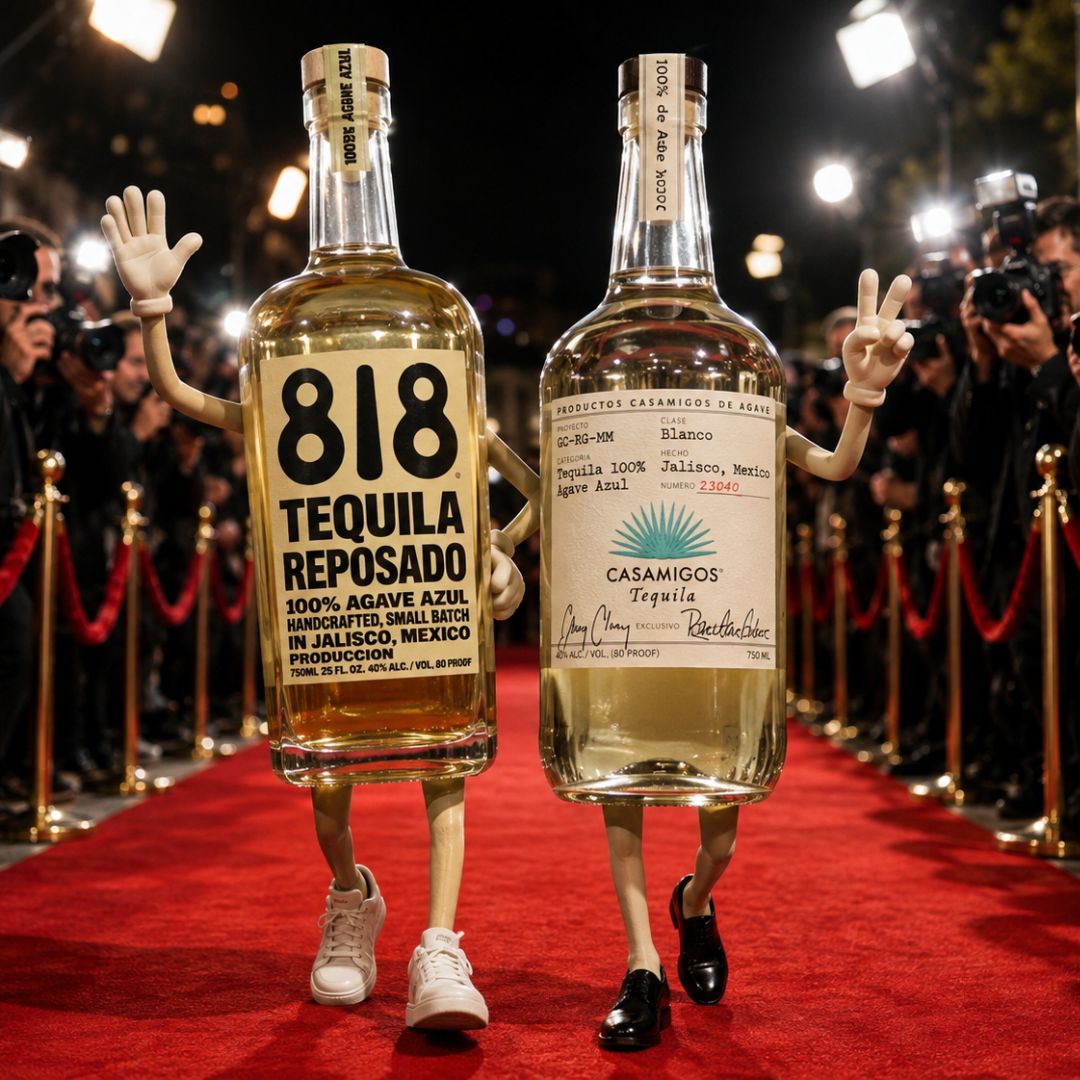
Ten years ago, the word “mezcal” drew blank stares at most American liquor stores. Tequila was a party shot or a margarita ingredient, its finer expressions appreciated by a small but growing tribe of converts. Today, agave spirits occupy the most valuable shelf space in the country, a celebrity-saturated, investor-fueled, multibillion-dollar juggernaut that shows no sign of slowing. How we got here is a story worth telling carefully, because the same forces that built this category are now reshaping it in ways that won’t all be comfortable.
The Baseline: Where the Category Stood in the Early 2010s
Coming into the decade, tequila was already an established player in the American market, but it operated very much in the shadow of American whiskey and vodka. The Distilled Spirits Council of the United States tracked tequila revenues in the low single-digit billions, and mezcal was a commercial rounding error. A handful of pioneering importers, Del Maguey chief among them, had spent years building a market for handcrafted Oaxacan mezcal at a time when most consumers thought the worm at the bottom of the bottle was the whole point.
Craft mezcal was the province of bartenders and spirits professionals. A bottle of single-village Del Maguey Chichicapa sitting on a back bar was a signal, a shorthand that told a certain kind of customer they were in good hands. That insider quality was part of the appeal, and it was also, for a long time, a ceiling on commercial growth.
Tequila, meanwhile, had already gone through one major premiumization cycle. The late 1990s and early 2000s had introduced American drinkers to aged expressions, and brands like Patron had reframed tequila as a sipping spirit worthy of a snifter. But the category was still dominated by volume brands, and the ultra-premium segment was thin. The decade that followed would change all of that, root to tip.
Casamigos and the Celebrity Pivot
If you want a single inflection point for the transformation that followed, it is hard to argue against the 2017 sale of Casamigos to Diageo for $1 billion. George Clooney and Rande Gerber had launched the brand in 2013 as what they described as a tequila they made for themselves, and the story sold. By the time Diageo acquired it, Casamigos was shifting roughly 120,000 cases annually, a respectable number but not one that traditionally justified a ten-figure price tag.
What Diageo was buying, of course, was not just a distillery. It was proof of concept. The transaction told every entertainment industry manager, sports agent, and brand consultant in the country that a famous face on a tequila bottle was worth more than anyone had previously modeled. The gold rush that followed was immediate and is still ongoing.
Dwayne Johnson’s Teremana launched in 2020 and within two years was selling over a million cases annually, a growth rate almost without precedent in the spirits business. Kendall Jenner’s 818 Tequila arrived in 2021 to immediate controversy about sourcing and authenticity, but also to strong sales. LeBron James, Nick Jonas, and a long list of others joined the party. By the mid-2020s, it had become difficult to name a major entertainment celebrity who did not have an agave spirits brand.
The effects on the category were complicated. Celebrity brands drove new consumers into tequila, many of whom eventually became curious about what else was out there. They also compressed margins for independent producers who could not compete on marketing budgets, and they contributed to the blue agave supply pressures that have become one of the industry’s most persistent structural problems.
The Agave Supply Crisis
Blue agave, the plant at the heart of tequila production, takes anywhere from seven to ten years to reach maturity. That biological reality has always made supply planning difficult, but the demand explosion of the past decade pushed the math into genuinely precarious territory. Raw agave prices, which had traded at around three or four pesos per kilogram in the early part of the decade, spiked dramatically as demand outpaced the plantings of a decade prior.
The price volatility hit smaller and midsize producers hardest. Larger houses with long-term agricultural contracts were partially insulated. Independent farmers who had planted on spec during lean years did well when prices surged, but the boom-and-bust cycle created uncertainty that rational agricultural planning struggles to accommodate. The industry has talked about cooperative supply management and long-term planting incentives for years, and the conversation has produced some positive movement, but the structural vulnerability remains.
Mezcal’s agave diversity presents a different version of the same problem. While blue agave monoculture in the Jalisco highlands is an agricultural concern, the wild agave populations that supply many artisanal mezcal producers are subject to entirely different pressures. Wild tobalá, wild tepeztate, and other slow-maturing, infrequently propagated species cannot simply be planted to meet demand. Some of the most celebrated mezcals in the world are made from plants that took twenty-five years or more to mature. What happens to those populations when global demand accelerates is a question the industry has not fully answered.
Premiumization and the Ultra-Premium Surge
One of the most consistent trends of the past decade has been the relentless upward migration of price points. The American consumer, conditioned by two decades of premiumization across wine, craft beer, and whiskey, proved willing to spend significantly more for tequila and mezcal than the category had historically commanded.
Extra-añejo tequilas, which require a minimum of three years of barrel aging, moved from novelty to serious commercial category. Single-barrel releases and vintage-dated expressions found buyers. Limited editions from producers like Fortaleza, Tequila Ocho, and El Tesoro developed secondary markets. The collector mindset that had long characterized Scotch whisky began to attach itself to agave spirits in ways that would have seemed implausible at the start of the decade.
Cristalino tequilas also emerged as a significant commercial phenomenon during this period. By filtering aged tequila through activated charcoal to remove color while retaining some of the wood-derived flavor compounds, producers created a category that appealed to consumers who wanted the cachet of an aged spirit and the visual clarity of a blanco. The category drew criticism from traditionalists who questioned whether charcoal filtration was erasing exactly the complexity that made aging worthwhile, but the market verdict was clear. Cristalinos sold, and they sold at premium prices.
Mezcal Grows Up
While tequila was absorbing its celebrity moment, mezcal was quietly building infrastructure. The Consejo Regulador del Mezcal certified more producers, established the espadin-versus-non-espadin distinction more clearly in consumer consciousness, and watched with some anxiety as volume demand pressed against the category’s artisanal identity.
The tension in mezcal between artisanal authenticity and commercial scale is genuine and unresolved. Brands like Ilegal, El Silencio, and eventually Banhez brought mezcal to price points and distribution scales that introduced millions of new consumers to the category. That broad introduction has been valuable. It has also created a market in which the word “mezcal” now covers everything from small-batch, wood-fired productions in remote Oaxacan villages to industrially scaled operations that look nothing like the producers who built the category’s reputation.
Meanwhile, the discovery of other agave-based spirits by bartenders and consumers has continued to expand the conversation. Raicilla, a Jalisco spirit with its own distinct character and production traditions, received its official denomination of origin in 2019. Bacanora, made from wild Agave pacifica in Sonora, has attracted growing interest. Sotol, derived from the Dasylirion plant rather than true agave but often discussed in the same breath, has developed an enthusiastic following. None of these categories has come close to tequila in commercial scale, but their emergence reflects a consumer base that has learned to think about agave spirits with genuine curiosity.
The Additive Debate
The most significant internal controversy of the past several years has centered on additives. The Tequila Regulatory Council permits up to one percent of certain additives, including caramel coloring, oak extract, glycerin, and sugar-based syrup, without requiring disclosure on the label. The regulation is not new, but public awareness of it is.
In 2020 and the years that followed, a combination of investigative journalism, social media scrutiny, and the work of consumer-oriented certification programs brought the additive question into mainstream discussion. The Tequila Matchmaker (now Agave Matchmaker) application began publishing an additive-free list that quickly became a reference point for a significant segment of the enthusiast community. Producers who had always made additive-free tequila found themselves with a marketing distinction they had not previously needed to make. Producers who had used additives as a production tool found themselves on the defensive.
The debate exposed a real tension in how the category presents itself. Marketing language across the tequila industry leans heavily on words like “natural,” “traditional,” and “authentic,” and consumers who had taken that language at face value were not always pleased to learn the full picture. The regulatory response has been minimal, and mandatory disclosure remains a goal rather than a reality. But consumer awareness, once raised, tends to stay raised.
What the Numbers Actually Say
By the early 2020s, tequila and mezcal combined had become the top-selling spirits category by revenue in the United States, surpassing American whiskey for the first time in the country’s history. That milestone, which would have seemed almost inconceivable a decade earlier, reflected the convergence of premiumization, celebrity marketing, the margarita’s enduring dominance of cocktail menus, and a genuine shift in consumer preference.
The ready-to-drink segment layered additional volume on top of a healthy base business. Canned margaritas and tequila seltzers proliferated on grocery and convenience store shelves, introducing the category to consumption occasions and retail channels where spirits had not traditionally competed. Hard seltzer’s rise and partial retreat left a market opening that tequila-based RTDs were well positioned to fill.
The growth was not uniformly distributed. At the top of the market, limited releases from independent producers sold through within hours of announcement. At the bottom, private-label and value tequilas competed on price in ways that left little margin for quality. The middle of the market, always the most competitive and most important part of any category, saw constant churn as brands jostled for position on increasingly crowded shelves.
The Road Ahead
The agave spirits category enters its next phase with extraordinary momentum and several structural concerns that are not going away. Agave supply will continue to be a constraint. Sustainability questions around both cultivated and wild agave species will become more pressing as environmental scrutiny of all food and beverage supply chains intensifies. The regulatory frameworks governing mezcal, tequila, and the emerging denominations will be tested by the same commercial pressures that have always strained artisanal categories when they go mainstream.
The celebrity brand wave may also be cresting. Consumers who entered the category through a famous face have had time to develop their own palates, and the brands that will hold those consumers long-term are the ones with something real to say about what is in the bottle. The producers who have been making serious, site-specific, tradition-grounded agave spirits for decades now have an audience that could not have existed ten years ago. Whether that audience grows faster than the production capacity of the people making the most interesting spirits is the defining commercial tension of the years ahead.
What is not in question is the category’s arrival. Agave spirits are no longer a niche. They are not going back to being one. The question now is what the industry does with that position, and whether the artisanal producers who built this thing will be able to participate in what they built.