
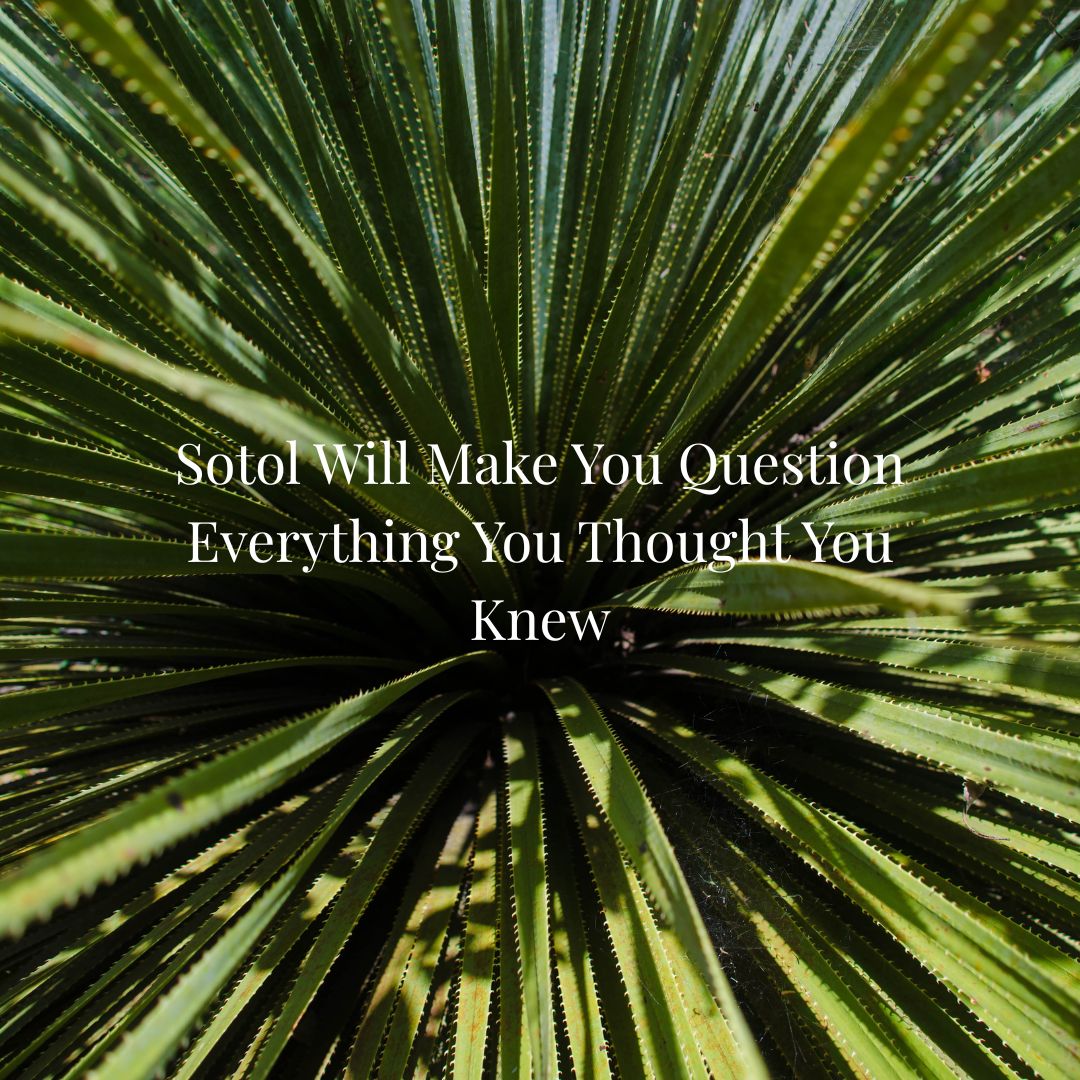
Pick up a bottle of sotol for the first time and there is a good chance you will read the label twice. Desert spoon? Chihuahuan Desert? Not agave? The questions pile up fast, and that is precisely the point. Sotol is a spirit that rewards curiosity and punishes assumptions, and if you have spent years happily navigating the world of mezcal and tequila, you are about to have your framework tested.
That is not a warning. It is an invitation.
Sotol is distilled from the Dasylirion plant, a genus that belongs to the Asparagaceae family — the same broad botanical family that includes agave, but a different genus entirely. In Mexico, where sotol holds a Denomination of Origin covering the states of Chihuahua, Coahuila, and Durango, producers are required to use plants from the Dasylirion genus. The most commonly used species is Dasylirion wheeleri, known colloquially as desert spoon, though several other species appear depending on the region and the producer. This distinction matters. Sotol is not mezcal made from a weird plant. It is its own thing, governed by its own rules, shaped by its own geography, and tasting like nothing else in your cabinet.
The Chihuahuan Desert, the largest desert in North America, stretches across parts of Mexico and into Texas and New Mexico. It is high, cold in winter, scorched in summer, and dominated by grasslands and scrub. Dasylirion thrives in this environment, growing at elevations that can exceed 6,000 feet. This terrain is a long way from the volcanic highlands of Jalisco or the valleys of Oaxaca, and the spirits that come out of it carry that difference in every sip.
One of the first things you will notice about sotol is that it does not announce itself the way a young mezcal might. The smokiness, when present, tends to be more restrained. What comes forward instead is a quality that experienced tasters often describe as green or herbaceous — a fresh, almost grassy character that owes something to the terroir and something to the plant itself. Dasylirion plants are not cooked to convert starches the way agave pinas are. The hearts, called corazones, are trimmed of their leaves and then roasted in underground pits or above-ground ovens depending on the producer, but the carbohydrate chemistry of Dasylirion is different from agave. The sugars ferment differently. The resulting spirit lands differently on the palate.
Unlike agave, Dasylirion does not die after flowering. The plant can be harvested, and under the right conditions new growth can emerge. This regenerative capacity has significant implications for sustainability, a topic the sotol industry has been grappling with seriously as demand increases. Harvesting wild plants is still common, and the pace of that harvesting in some regions has outrun the pace of natural regeneration. Responsible producers are investing in cultivation programs and working with ejido communities to manage wild populations more carefully. It is a conversation the industry needs to keep having.
In terms of production, sotol follows a general arc familiar to anyone who has toured a small mezcal palenque: harvest, roast, shred or mill, ferment, distill. But the details vary enormously. Some producers use wooden fermentation vats. Some use open-air natural fermentation that can last weeks. Distillation happens in copper pot stills, clay pot stills, or in some cases repurposed equipment that tells its own story. The result, when done well, is a spirit of genuine complexity — one that can show fruit, minerals, white pepper, dried herbs, and a lingering earthiness that changes as the glass opens up.
Aging is becoming more common. Reposado and anejo expressions exist and are worth exploring, though purists will argue that the unaged blanco or plata expression is where you hear the plant and the place most clearly. They are probably right, but that should not stop you from trying both.
Texas deserves a mention here. The Dasylirion plant grows abundantly in the Trans-Pecos region of West Texas, and a small but serious cohort of Texas distillers has been making sotol — or sotol-adjacent spirits, depending on how you read the regulations — for more than a decade. Because the Mexican Denomination of Origin covers only Chihuahua, Coahuila, and Durango, spirits made in Texas cannot legally be called sotol under Mexican law. Some Texas producers use the term anyway, which creates ongoing debate. Others embrace different terminology. The quality, in the best cases, is not in question. Whether the nomenclature ever gets sorted out is a separate matter.
If you are new to sotol, start with an unaged expression from a small Chihuahuan producer. Pour it neat. Give it time. Resist the urge to compare it immediately to the mezcal on the shelf next to it. Sotol is not competing with mezcal. It is not a substitute or a curiosity. It is a legitimate category with centuries of production history, a distinct botanical identity, and a regional culture that deserves to be understood on its own terms.
The questions that come when you first pick up a bottle are good questions.
Follow them.
The answers, poured out slowly over time and across many glasses, are worth every sip.