
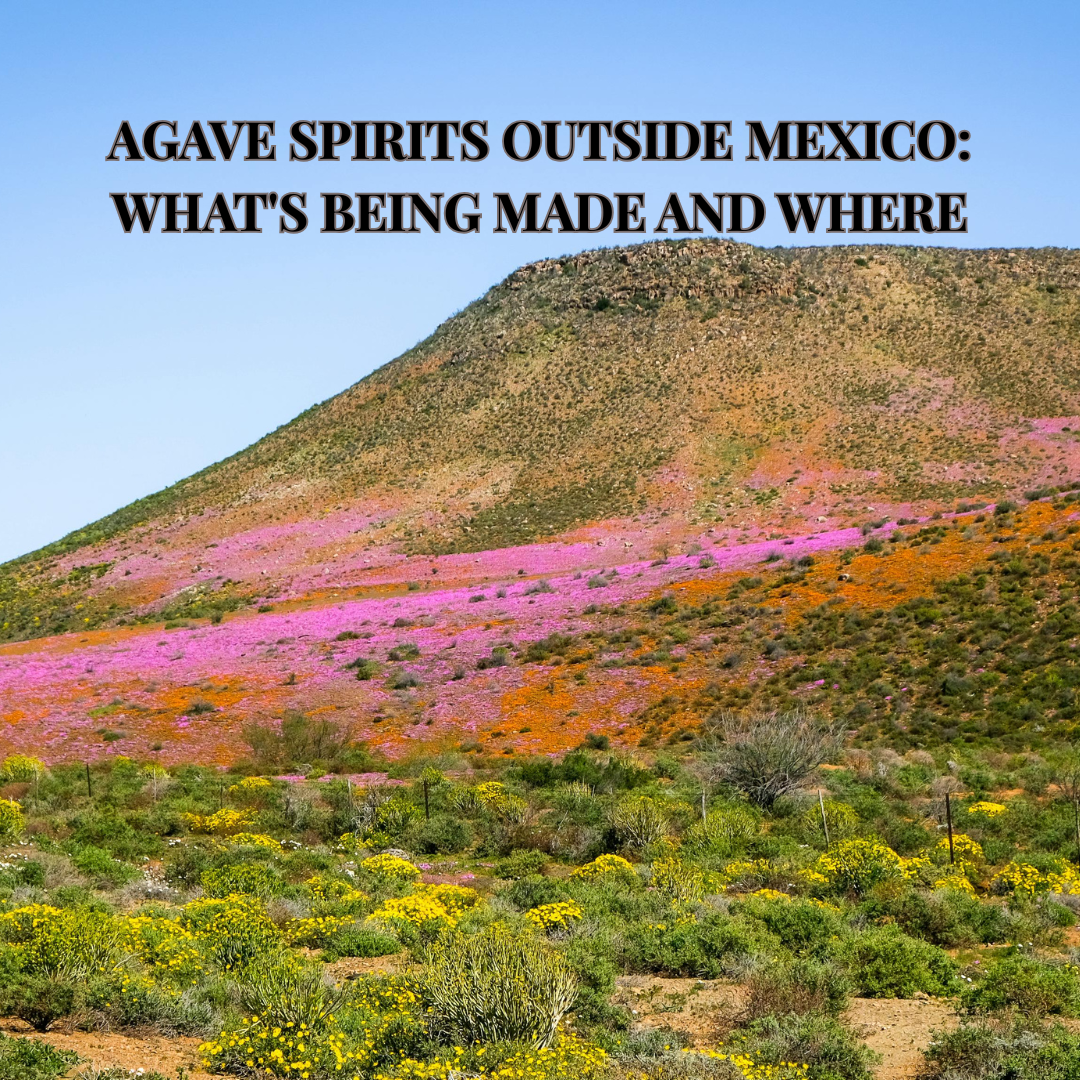
From the Karoo Desert to the Queensland coast, distillers on six continents are working with agave. Here is what they are making, why it matters, and what it actually tastes like.
Mexico did not invent the agave plant. It cultivated a relationship with it spanning thousands of years, developed the knowledge to ferment and distill it, and eventually built an entire culture around the results. That history is real and it deserves respect. But the agave itself has never recognized a border. Carried by birds, traded by colonists, transported as fiber crops and ornamental curiosities, the genus Agave has spread to every continent except Antarctica over the past four centuries. Somewhere north of 200 species exist across the Americas, and introduced populations of a handful of those species have taken root on multiple continents.
The result is that today, in South Africa’s Karoo Desert, in the highlands of the Indian Deccan Plateau, in Queensland’s dry tropics, and along California’s central coast, there are people growing agave, cooking it, fermenting it, and distilling it. They cannot call the results tequila or mezcal, both of which are Denominations of Origin legally tied to specific regions and production methods within Mexico. What they can make, legally and with growing ambition, is agave spirit.
How Agave Left Mexico
The dispersal of agave beyond the Americas began in earnest during the colonial period. European powers recognized the plant’s utility, particularly its strong fibers, and began transplanting species like Agave sisalana and Agave fourcroydes to tropical and subtropical regions for the textile trade. By the 18th and 19th centuries, plantations of sisal and henequen existed in East Africa, South Asia, and across the Pacific. These agricultural introductions, combined with the widespread use of agave as an ornamental plant in Mediterranean-climate gardens, meant that by the 20th century, agave was effectively naturalized on six continents.
The United States: Closest to the Source
The American Southwest is native agave territory. Dozens of agave species are indigenous to Texas, New Mexico, Arizona, and California, and Indigenous communities in those regions fermented agave long before any European arrived. The modern commercial movement to distill locally grown agave in the United States is shaped more by craft spirits culture than by indigenous tradition, but the botanical raw material is genuinely at home in the landscape.
California has been the center of American agave spirit experimentation. Ventura Spirits is among the most visible. Their expression, called tecolotito, is distilled from Agave Tequilana farmed in Glen Annie Canyon in Goleta, California. The resulting spirit is available in blanco and reposado formats and sold exclusively within California. California passed AB2303 in 2022, establishing labeling requirements and quality standards for California-produced agave spirits — the first state-level regulatory framework of its kind in the United States.
South Africa: Agave Finds the Karoo
South Africa’s semiarid interior offers conditions that closely parallel parts of Mexico: thin soils, intense sun, low annual rainfall, and wide temperature swings between day and night. Leonista, launched in 2017 by Sarah Joanna Kennan, is widely credited as the first 100% Karoo agave spirit, built on traditional Mexican methods with a pronounced smoky quality reminiscent of mezcal.
Spearhead Spirits has brought South African agave to international markets under the label Sango African Agave Spirit. Sango draws from two South African growing regions and roasts the piñas using artisanal methods. At the 2024 International Wine and Spirit Competition, the Sango Blanco won gold and the Reposado took silver — not trivial results for a young brand competing in a field dominated by spirits with centuries of institutional knowledge behind them.
Australia: Making Use of an Unwanted Plant
Australia’s relationship with agave is complicated. Several species were introduced in the early 20th century and became invasive, spreading across Queensland and New South Wales. Top Shelf International launched Act of Treason from Queensland-grown agave. Black Snake Distillery is another Australian producer working with locally grown agave and drawing on Mexican production traditions as a reference point.
The Australian context adds an environmental dimension: distilling from established invasive agave populations requires no new planting, no new land clearance, and potentially helps manage a plant that would otherwise be an agricultural problem.
India: Ancient Plant, New Bottle
Agave americana has grown across India for centuries, present in the wild across the Deccan Plateau, Rajasthan, Andhra Pradesh, and the hills around Shimla. Rakshay Dhariwal founded Maya Pistola Agavepura in Goa in 2022, sourcing 100% wild Agave americana from the Deccan Plateau and distilling it in Goa. The portfolio includes a reposado aged in virgin American oak and former bourbon barrels, and a rose expression aged in cabernet sauvignon barrels.
Venezuela: The Oldest Non-Mexican Tradition
If any agave spirit tradition outside Mexico can claim genuine depth of history, it is Venezuela’s. Cocuy, distilled from Agave cocui trelease, a species endemic to the country’s Lara and Falcon states, has been produced since before European contact. The DUG Group’s brand, Cocuy Saroche, entered the United States market in the fourth quarter of 2024, the first Venezuelan agave spirit sold commercially in the US. Given that the agave cocui plant exists nowhere else on earth except Lara and Falcon, cocuy occupies a genuinely unique position in the global category.
New Zealand and the Canary Islands: Smaller Stages
Among the more unlikely agave spirits on the market is TeKiwi 100% Blue Agave Tequilana, produced by Kiwi Spirit Distillery in Golden Bay on the South Island of New Zealand. The Weber Blue Agave plants trace their origins to a private French collection from the early 1900s, brought to New Zealand in the 1990s as ornamental specimens. Golden Bay’s fertile alluvial soils, pure limestone aquifer water, and mild coastal climate produce a spirit described as earthy, minty, and floral with notable minerality.
The Question Nobody Wants to Skip
Tequila’s terroir is real. The mineral-rich volcanic soils of the Jalisco highlands, the clay and limestone of the lowlands, the specific wild yeasts floating in the air of Oaxacan palenques, the knowledge accumulated across generations of maestros vinateros: these things produce flavors that cannot be fully replicated elsewhere. That is not nationalism or sentimentality. It is chemistry and culture and time.
Non-Mexican agave spirits are not attempting to replicate that. Or at least, the serious ones are not. What Sango tastes like is South Africa. What Maya Pistola tastes like is the Deccan Plateau. What TeKiwi tastes like is the limestone aquifers of Golden Bay. These are genuinely different expressions of the same plant family.
The answer to legitimate concerns about diluting consumer understanding is not to dismiss non-Mexican agave spirits. It is to be specific. To tell consumers where a spirit comes from, what species of agave was used, how it was cooked and fermented, and what the land it grew in actually looks and smells like. That specificity is what has always separated serious agave culture from mass-market noise, and it applies just as well to a bottle from Goa or Goleta as it does to one from Oaxaca.
The agave is a patient plant. It has had centuries to spread. The spirits made from it outside Mexico are just getting started.