
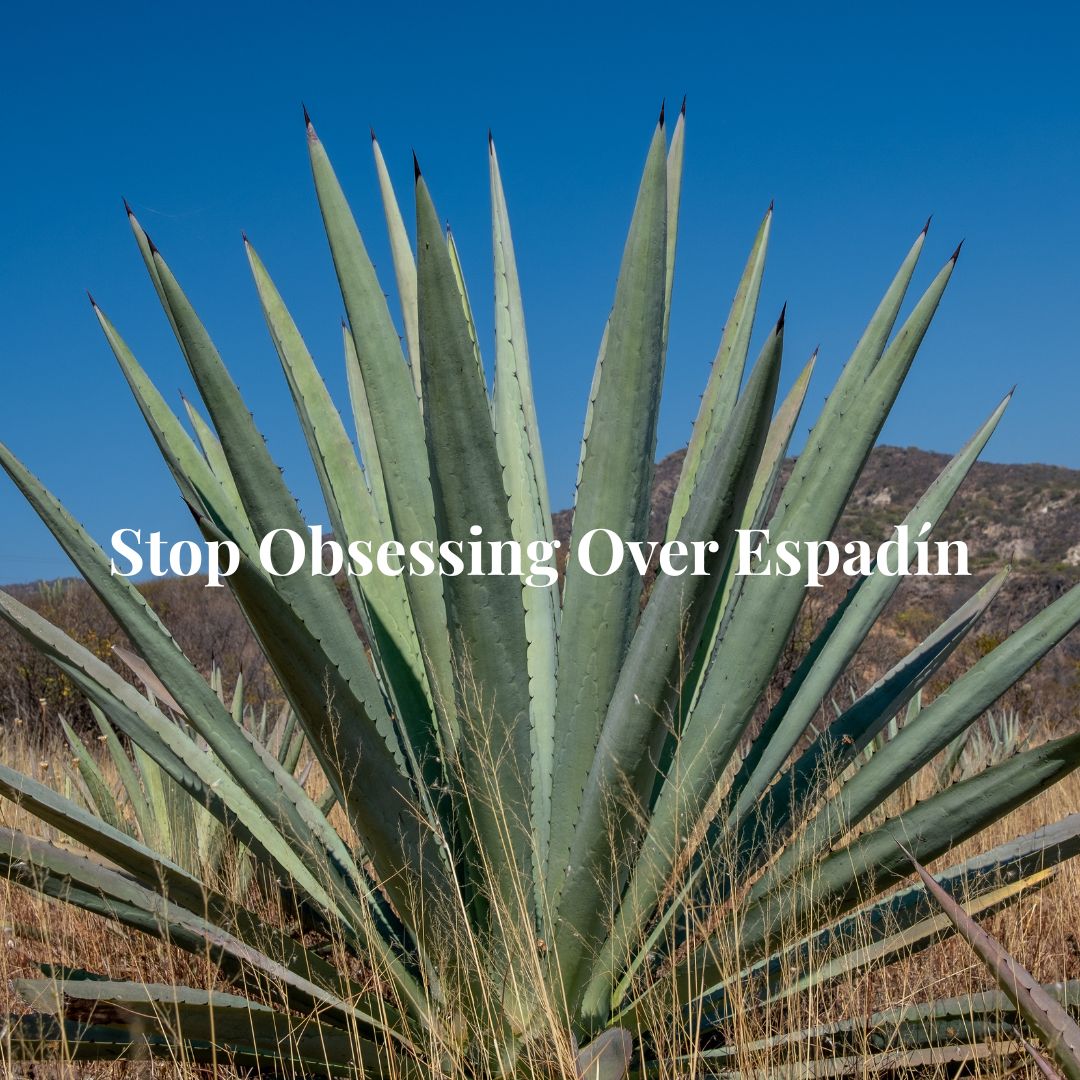
Walk into any serious mezcal bar and you will find a flight card dominated by Agave angustifolia, better known as espadín. Order a sampler. The bartender will explain each bottle with genuine enthusiasm. But ask them why every pour is the same species, and you will likely get a shrug dressed up as a recommendation: espadín is approachable, they will say. It is consistent. It is what people know.
That is precisely the problem.
Espadín accounts for somewhere between 80 and 90 percent of all mezcal produced in Mexico. It became the workhorse of the category for practical reasons: the plant matures in roughly seven to ten years, adapts to a wide range of growing conditions across Oaxaca and beyond, and produces a high yield of fermentable sugars per kilogram of piña. For a producer trying to meet demand and keep the lights on, espadín makes obvious sense. For a drinker trying to understand what the agave spirits world actually contains, a diet of nothing but espadín is like spending a year in France eating only baguettes.
The agave world holds hundreds of species. Not all of them are distilled, and not all of those that are distilled produce great spirits. But among those that do, the range of flavor, texture, and character is genuinely unlike anything the mainstream spirits world offers. Tobalá (Agave potatorum) grows wild in rocky, high-altitude terrain across Oaxaca and Puebla, taking twelve to fifteen years to reach maturity. The spirits it produces tend toward florality and spice, often with a silky texture that reads as almost delicate. Tepeztate (Agave marmorata) can take twenty-five years or more to mature in the wild, and the spirits it yields are some of the most polarizing in the category: green, herbal, sometimes almost feral in their intensity. Arroqueño (a variant of Agave americana) produces spirits of remarkable weight and depth, rich with fruit and earth. The various members of the karwinskii family, including madrecuixe, tobaziche, and bicuixe, tend toward the leaner and more mineral end of the spectrum.
None of these tastes like espadín. That is the point.
The price premium on non-espadín mezcals reflects real scarcity and real cost. A tobalá piña weighs a fraction of what an espadín yields. A tepeztate that took three decades to grow cannot be replaced in a season. When you pay more for these bottles, you are paying for time, for lower yields, and, in many cases, for the additional skill required to work with plants that behave very differently from the category standard. Whether the juice in the bottle justifies the price is a question only you can answer, but the premium is not arbitrary.
There is also a conservation dimension worth understanding. Wild agave populations face real pressure from increased harvesting demand. Slow-maturing species like tepeztate and tobalá reproduce primarily through seed, which means overharvesting can set a local population back by decades. Some producers are addressing this through cultivation and active replanting programs. Others are not. Asking your retailer or importer whether the brand you are considering works with cultivated agave or has a documented replanting practice is a reasonable question, and a good producer should have a real answer.
None of this means you should stop drinking espadín. Excellent espadín exists, and the category serves real purposes: it is often the right base for cocktails, the right introduction for new drinkers, and the right bottle when you want something consistent and drinkable for a weeknight pour. But if espadín is the beginning and end of your mezcal knowledge, you are missing most of the story. The next time you are at a good bar or bottle shop, ask what they have beyond espadín and let the answer surprise you.