
Walk into any serious agave bar in the United States and ask for a raicilla. If the bartender knows the category, you will likely hear some version of the same introductory line: “It’s basically Jalisco’s version of mezcal.”
The comparison is understandable. Mezcal is the reference point most American drinkers have for agave spirits that are not tequila. And raicilla does share a few surface-level traits with mezcal: it is made from roasted agave, it is typically produced in small batches by artisan distillers, and it often carries the kind of aromatic complexity that tequila, in its industrial form, has largely abandoned.
But calling raicilla “Jalisco’s mezcal” does the spirit a disservice. It flattens a category with its own history, its own production traditions, its own geography, and its own legal standing into a supporting character in someone else’s story. And it misses what makes raicilla genuinely compelling: not that it resembles mezcal, but that it developed independently, over centuries, in conditions that produced something with no real equivalent anywhere in the agave world.
A History That Predates the Labels
Agave distillation in western Jalisco has been going on for centuries, likely since the 1500s, when Spanish settlers introduced European distillation techniques to a region where indigenous communities had long been cooking and fermenting agave. The spirit that would eventually be called raicilla was, for most of that time, simply what people in the sierra and along the Pacific coast made and drank.
The name itself has contested origins. One popular account holds that producers adopted the term “raicilla” (meaning “little root”) during the colonial era to dodge Spanish taxes on mezcal. By calling the spirit something else, producers could claim it was a different product entirely. Esteban Morales, owner of La Venenosa, has pushed back on this narrative, noting that mezcal was never formally prohibited in the territories of Nueva Galicia. Others, like fifth-generation coastal raicillero Jorge Carbajal, maintain that the name “raicilla” has simply always been in use in the region.
Whatever the origin of the name, the spirit has a continuous production history spanning hundreds of years. It was made in the mountains around Mascota and San Sebastián del Oeste. It was made along the coastal corridor near Cabo Corrientes and south toward Tomatlán. It was sold locally, shared at festivals, and passed down through families. While tequila industrialized and mezcal fought over Denominations of Origin, raicilla just kept being made, quietly, in small tabernas tucked into the hills of western Jalisco.
That persistence matters. Raicilla was never stamped out by regulation or absorbed into a larger category. It was overlooked, which turned out to be a form of protection. The producers who kept making it were not performing for a market. They were simply continuing a practice that had always been part of their communities.
Two Regions, Two Spirits
One of the most important things to understand about raicilla is that the category encompasses two distinct regional traditions that produce significantly different spirits.
Raicilla de la Sierra comes from the mountainous inland region, centered around municipalities like Mascota, San Sebastián del Oeste, and Talpa de Allende. Producers in the sierra primarily work with Agave maximiliana (commonly called lechuguilla) and Agave inaequidens. They tend to cook their agave in above-ground masonry ovens. Sierra raicillas often carry flavors of dried flowers, wild herbs, black pepper, and a savory mineral quality.
Raicilla de la Costa comes from the Pacific coastal corridor, especially around Cabo Corrientes, Puerto Vallarta, and Tomatlán. Coastal producers work primarily with varieties of Agave angustifolia and Agave rhodacantha. They typically cook agave in underground earthen pits and distill using Filipino-style stills. The spirit comes out tasting altogether different from its mountain counterpart: think ripe tropical fruit, sea air, bright citrus, and fresh herbs.
The gap between a sierra and a coastal raicilla can be dramatic. If you taste the two side by side, you might question whether they should even belong to the same category. That diversity is not a flaw. It is the whole point. Raicilla reflects the range of what agave can do when different species are grown in different soils at different altitudes and processed by different hands using different methods.
A Denomination of Its Own
In June 2019, raicilla received its own Denominación de Origen from the Mexican Institute of Industrial Property (IMPI). The protected zone covers 16 municipalities in Jalisco and one in Nayarit. This is a critical detail. Raicilla is not classified under mezcal’s Denomination of Origin. Raicilla cannot legally be labeled as mezcal. It has its own legal identity, distinct from both tequila and mezcal.
Why the Mezcal Comparison Falls Short
The impulse to compare raicilla with mezcal is not malicious. For most consumers, “mezcal” is shorthand for any artisanal agave spirit that is not tequila, and raicilla fits that mental model on the surface. But the comparison creates problems.
First, it sets the wrong expectations. If you hand someone a glass of coastal raicilla and tell them it is like mezcal, they will go looking for the smoky, earthy, mineral flavors they associate with Oaxacan espadín. They will not be prepared for a spirit that tastes like guava and white pepper and ocean breeze. The mismatch between expectation and experience can make a drinker dismiss a perfectly good spirit instead of appreciating it on its own terms.
Second, it subordinates raicilla to a category it is not part of. Mezcal has its own legal framework, its own Denomination of Origin, its own three-tier classification system. Raicilla exists outside all of that. Calling it “Jalisco’s mezcal” implies that it is a regional variant of a larger category, when in fact it is a parallel tradition that developed on its own terms in its own geography.
Third, it erases the specific history and culture of western Jalisco’s raicilleros. These are not mezcaleros who happen to live in the wrong state. They are taberneros and maestros raicilleros who carry forward a tradition specific to the sierras and coastal hills of their region. Their stills are different. Their agaves are different. Their cooking methods are different. Collapsing all of that into “like mezcal, but from Jalisco” strips it of meaning.
What Raicilla Actually Tastes Like
If you have never tried raicilla, prepare to be surprised, and prepare for the two regional styles to surprise you in completely different directions.
Sierra raicillas tend to be earthy, herbaceous, and savory. You might get dried flowers, wild mint, cracked pepper, damp earth after rain, and a flinty mineral backbone. Coastal raicillas go in a completely different direction: intensely fruity and aromatic, with ripe tropical fruit, fresh citrus, green herbs, and in some cases a faint salinity that evokes the Pacific coastline. ABV typically lands between 40% and 55%. Most raicilla is bottled unaged.
Where to Start
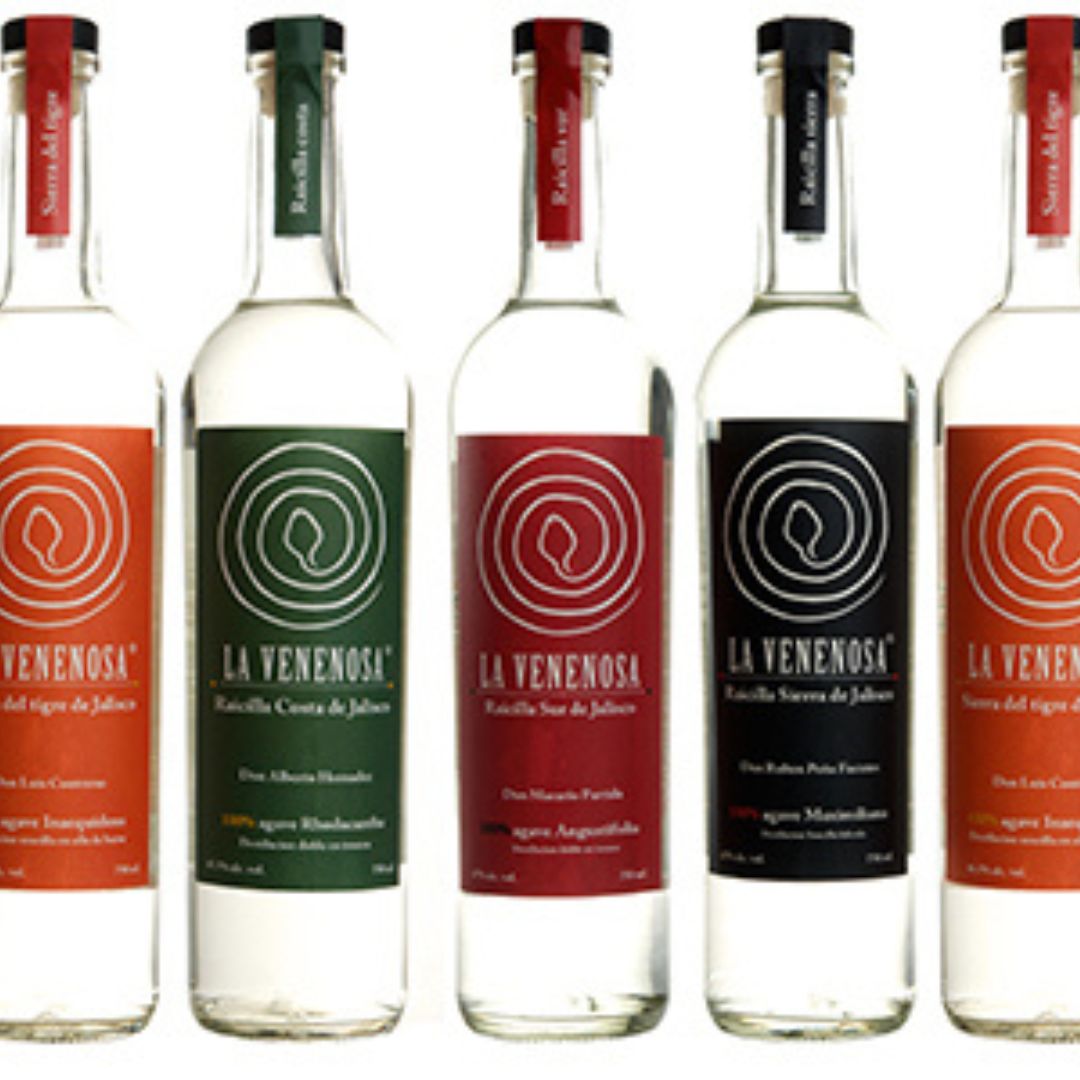
La Venenosa is the brand most responsible for introducing raicilla to the U.S. market and remains one of the best entry points. Their lineup includes expressions from multiple municipalities, allowing you to taste the regional differences within a single brand. Try their Tabernas Sierra expression against their Suriana coastal bottling side by side. Estancia Raicilla, Hacienda Divisadero, and Amatitana are also worth seeking out.
The single best piece of advice for your first raicilla experience: approach it on its own terms. Do not compare it to mezcal. Do not compare it to tequila. Pour it, smell it, taste it, and let the spirit tell you what it is. It has been doing that for five hundred years.
The Bigger Picture
Raicilla matters not just because it is a good spirit, but because of what its existence says about the broader agave landscape. Mexico’s agave traditions are vastly more diverse than the tequila-and-mezcal binary that dominates the American market. Annual production has jumped from roughly 80,000 liters a decade ago to an estimated 550,000 liters, and exports have surged. How the category navigates the pressure of growth, whether it prioritizes tradition and quality or yields to volume and marketing, will depend largely on decisions being made right now.
Raicilla is not Jalisco’s mezcal. It is not a footnote in someone else’s story. It is a spirit with its own roots, its own geography, its own legal standing, and its own extraordinary range of flavors. It deserves to be understood, and enjoyed, on those terms.
For in depth information on raicilla or to plan a trip to experience raicilla where it is made, visit Experience Agave. Clayton Szczech has an excellent informational page and plans once in a lifetime experiences.