
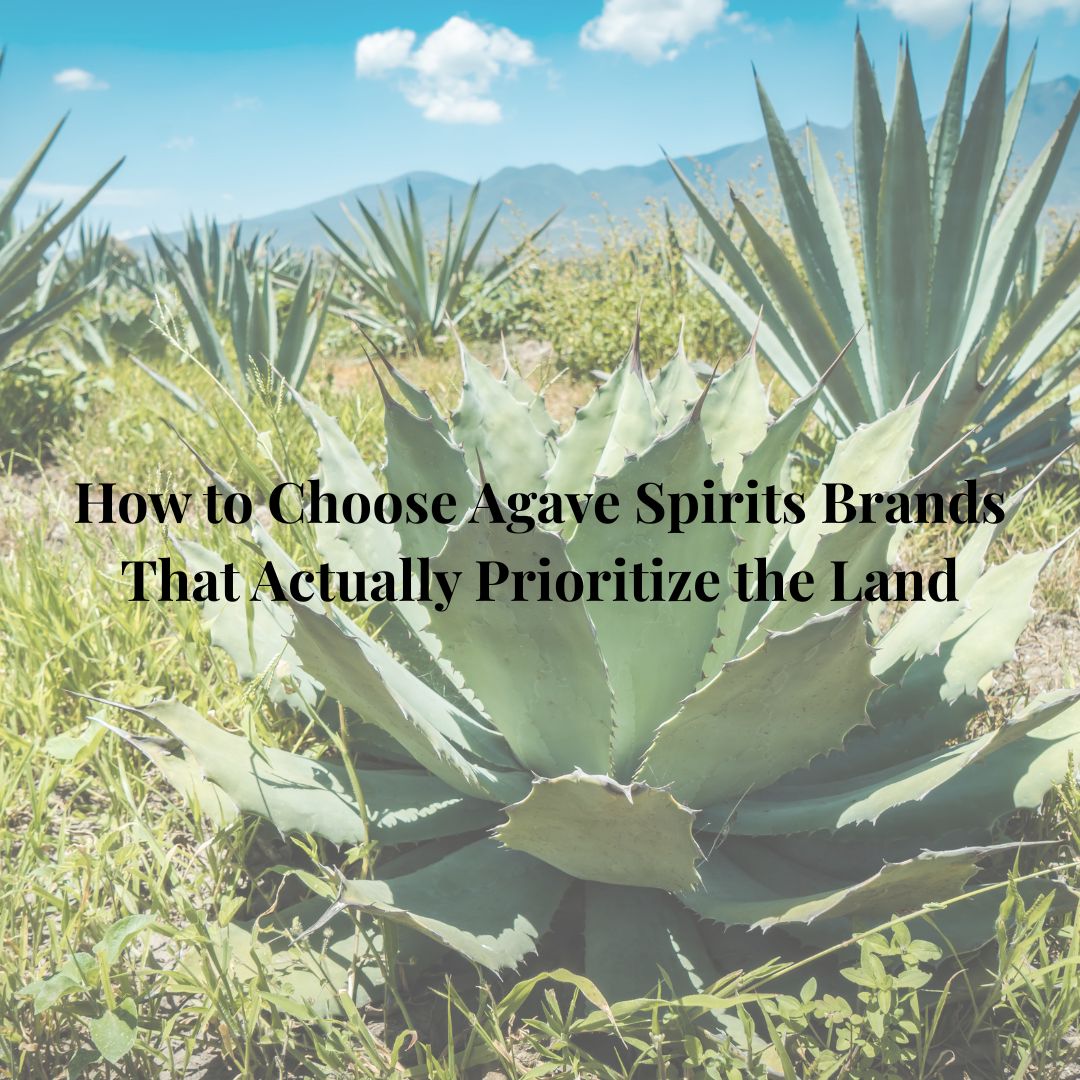
There is a phrase you will hear often in the world of agave spirits: “sustainable.” You will see it on shelf talkers, in tasting notes, on brand websites with photographs of sun-drenched hillsides and smiling farmers. What you will hear far less often is a clear explanation of what any of it actually means — or who is checking.
The agave plant is not a renewable resource in the way that corn or sugarcane is. Wild-harvested maguey can take anywhere from seven to thirty-five years to reach maturity, depending on the species. A cultivated espadin agave in the Oaxacan valleys might be ready in six or seven years. A tobala growing at elevation in rocky soil might need twenty. In every case, the plant dies when it is harvested. What replaces it — and whether anything replaces it at all — is one of the defining questions facing the category today.
If you care about the long-term health of this category — and not just about what is in your glass tonight — here is how to think about choosing brands that are actually doing the work.
Start With the Species
Not all agave faces the same pressure. Espadin (Agave angustifolia) is the workhorse of Oaxacan mezcal and is widely cultivated, which means demand has a reasonable agricultural infrastructure behind it. Wild-harvested species are a different matter entirely.
Tobala, tepextate, mexicano, tepeztate, Sierra Negra — these are varieties that grow wild, reproduce slowly, and in many cases are not being cultivated at a commercial scale. A bottle of wild tobala mezcal is not inherently irresponsible, but it does carry a heavier ecological cost than a bottle of cultivated espadin. Understanding that calculus is step one.
The question to ask — of the brand, of the retailer, of anyone selling you a bottle of a rare or wild-harvested species — is whether the producer is cultivating alongside harvesting, or simply harvesting. Some producers are doing serious cultivation work with species like tobala and tepeztate. Others are not, and the difference matters enormously over a twenty-year timeline.
Follow the Ownership, Not Just the Story
Many brands that present themselves as deeply committed to the land do not actually own land. That is not automatically disqualifying — there are responsible sourcing models built on long-term relationships with farming families — but it does mean the brand’s commitment to the land is only as strong as its contracts and relationships with those who actually tend it.
The brands worth your attention are those that can tell you specifically who grows their agave, where, how long the relationship has been in place, and what, if anything, they are doing to support replanting. Long-term purchasing agreements that pay above market rate are one signal. Producer-owned brands are another. Brands that have invested in agave nurseries — either independently or in partnership with producers — are doing something concrete.
When a brand cannot tell you who grows their agave, that is an answer too.
Look for Replanting Commitments With Actual Numbers
“We are committed to replanting” is marketing. “We replanted 150,000 agave last year across three communities in the Sierra Juarez” is a data point. The difference between those two sentences is everything.
Some producers and brands publish transparency reports. Some share planting numbers in their communications with trade and press. Some have partnered with organizations like Bat Friendly, which certifies that producers allow agave to flower before harvest — a practice that supports the pollinators, particularly lesser long-nosed bats and Mexican long-tongued bats, that agave depends on for cross-pollination and genetic diversity. These certifications do not address every sustainability concern, but they indicate a producer who is paying attention to ecological relationships beyond the harvest itself.
Ask brands directly. If the answer is vague, that is useful information. If the answer is specific and verifiable, that matters.
Water Is Not a Secondary Concern
Mezcal production is relatively water-light compared to many agricultural industries. Agave is a drought-adapted plant, and traditional production methods do not require the volumes of water that, say, beer or whiskey production does. Tequila production is a different story. The Jalisco highlands and lowlands face real groundwater pressure, and the industrial scale of the tequila industry — with millions of liters produced annually — puts meaningful stress on regional water supplies.
Brands operating at industrial scale that cannot speak to water stewardship practices in their distilleries and surrounding agricultural operations are leaving a significant part of their environmental footprint unaddressed. Smaller producers who use traditional cooking and fermentation methods, and who do not rely on heavy autoclave or diffuser processing, typically carry a lighter footprint on this front — though scale and context matter.
Production Method Is Land Stewardship
This point is underappreciated. How an agave spirit is made is not just a question of flavor — it is a question of what the production process demands of the land and the plant.
Diffuser-produced tequila, for example, strips the agave of its sugars without cooking it, which means the plant’s fibers are discarded without having contributed to the flavor profile. It is an efficient process designed for volume, not for the plant. Traditional tahona or roller mill production, with pit or autoclave roasting, extracts from the whole cooked agave and leaves behind bagaso — the spent agave fibers — that many producers return to the field as organic matter. Some producers have experimented with using bagaso in construction materials or composting programs. The point is that traditional methods tend to work with the plant more completely.
None of this means every traditionally made spirit is automatically responsible, or that every large-scale producer is irresponsible. But production method is a reasonable proxy for a brand’s orientation toward the plant and the land — and it is worth understanding.
Community Is Land
The land does not exist in isolation from the people who have stewarded it for generations. In Oaxaca, many of the communities producing mezcal operate under communal land governance systems — sistemas de usos y costumbres — that have managed agave populations and production for centuries. Brands that work within and support those governance structures are doing something qualitatively different from brands that extract resources and export value without reinvestment in the communities where production happens.
Fair pricing for producers is land stewardship. When a maestro mezcalero is paid fairly for their work and their agave, they have the resources and the incentive to invest in replanting, in maintaining production infrastructure, in passing knowledge to the next generation. When they are not paid fairly, those investments do not happen. It is a direct connection.
Several brands publish what they pay per liter or per kilo of agave. Others are opaque about pricing. Transparency here is a meaningful signal.
Certifications: Useful, But Not Sufficient
The Consejo Regulador del Mezcal and the Consejo Regulador del Tequila regulate what can be called mezcal or tequila within their respective denominations of origin. They do not certify sustainability practices. Organic certification is available and meaningful when present, but organic certification does not guarantee replanting or address the question of wild-harvested species. The Bat Friendly certification, developed by researchers at the Universidad Nacional Autonoma de Mexico, addresses pollinator health. Some brands have pursued B Corp certification, which evaluates a broader range of social and environmental commitments.
No single certification covers everything. Use them as data points, not as final answers.
The Practical Question
If you are standing at a bottle shop or reading a menu and you want to make a more considered choice, here is the shortest version of this conversation: ask where the agave comes from and who grows it. If the person behind the counter cannot tell you, that tells you something about how the brand communicates with the trade. If the bottle has a back label with specific information about the producer, the community, and the species, that is a brand that has invested in transparency. If the back label says “crafted in Mexico” and nothing else, that is not.
The agave spirits category has real ecological challenges ahead of it. Wild species face harvest pressure that is not always matched by cultivation. Communities producing traditional spirits are navigating rapid category growth with limited institutional support. The land itself — the volcanic soils, the cloud forests, the arid hillsides where agave has been growing for millennia — is under pressure from climate, from agriculture, and from demand.
Your purchasing decisions are not going to fix any of that on their own. But the brands that are genuinely doing the work deserve your support, and the brands that are selling a sustainability story without backing it up deserve your skepticism. Knowing the difference is most of the battle.