
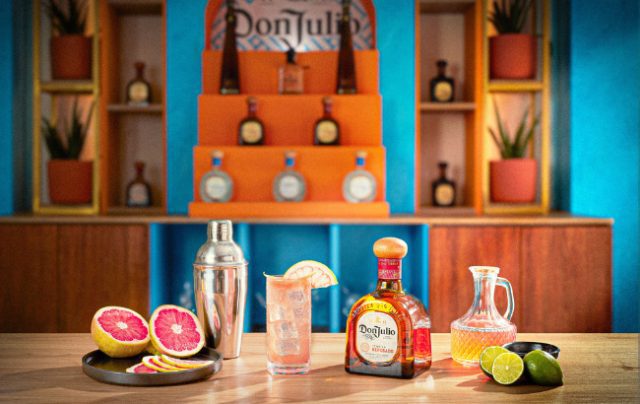
A New York federal judge ruled that five lab samples were not enough to show widespread adulteration of Casamigos and Don Julio. The decision does not settle what is in the bottle, and the fight over tequila trust is far from over.
A US federal court has thrown out a proposed class action that accused Diageo of selling Casamigos and Don Julio tequilas as 100% agave when they were not made exclusively from Blue Weber agave. On 30 September 2026, Judge LaShann DeArcy Hall of the US District Court for the Eastern District of New York granted Diageo’s motion to dismiss the complaint, which argued the company had misled consumers who bought the two brands.
What the plaintiffs claimed
The suit, Pusateri v. Diageo North America, was filed in May 2025 by consumers Avi Pusateri and Chaim Mishulovin, together with the restaurant Sushi Tokyo. Under Mexico’s tequila regulations, a product labelled ‘100% de agave’ or ‘100% agave azul’ must use sugars derived exclusively from Blue Weber agave. The plaintiffs argued that buyers paid a premium for Casamigos and Don Julio because they believed the bottles met that standard.
The allegations followed initial laboratory testing by the Additive Free Alliance (AFA), a group focused on transparency in tequila production. The plaintiffs then commissioned their own tests on five products they bought directly: Casamigos Blanco, Reposado and Añejo, plus Don Julio Reposado and Don Julio 1942 Añejo. According to the complaint, none of the five was made entirely from agave. The plaintiffs also argued the results applied across Diageo’s tequila portfolio, because the products allegedly share an adulterated base spirit.
Diageo denied the allegations in its first response in July 2025. It filed a motion to dismiss a similar class action in Florida on 28 October 2025, and moved to dismiss in New York several days later.
Why the judge dismissed the case
Diageo argued that the plaintiffs had not pleaded facts showing they tested their own bottles, or that adulteration was so widespread that the bottles they bought were likely affected. The court agreed that the testing fell short of proving systemic, widespread adulteration. The judge said she struggled to see how a study of five samples could support a reasonable inference of “ubiquitous, systemic mislabeling.”
The ruling also noted that the plaintiffs pointed to news coverage of adulteration problems in the tequila industry, but that the coverage had not named Diageo or its products.
Diageo welcomed the outcome. In a statement, the company said it was gratified that the court had rejected the adulteration allegations in their entirety, adding: “Casamigos and Don Julio are made from 100% Blue Weber agave.”
What the ruling does not settle
The decision turned on whether these plaintiffs had adequately shown harm and supported their claim with enough evidence. It was not a finding that the tequilas are 100% agave, a point made in the Agave Today 2027 Market Report. The report notes that plaintiffs’ lead counsel, Steve Berman, said the ruling “gets the record wrong” and that his team may ask the court to reconsider. An appeal, or refiled claims backed by broader testing, also remain possible.
Diageo continues to face similar lawsuits in San Francisco, California, and Miami-Dade County, Florida, as well as in Canada. According to the report, the related US suits are not bound by the New York ruling.
Other tequila brands remain in court as well. The report notes that a federal court in Illinois denied 818 Tequila’s motion to dismiss on 7 October, letting that case proceed, while a suit against Cincoro in the Southern District of Florida is pending with no ruling reported.
The AFA, whose testing prompted the allegations, has its own legal dispute. The report says the Consejo Regulador del Tequila (CRT) sued the Alliance in US federal court in March 2025, and that the Alliance shut down its testing programme at the end of 2024. No resolution of that case has been reported.
The business backdrop
Don Julio is the world’s second best-selling tequila brand behind Jose Cuervo, according to The Brand Champions 2026 report, selling 4.5 million nine-litre cases in 2025. Casamigos, founded by George Clooney, ranked seventh with 1.9 million cases. Diageo bought Casamigos in 2017 in a deal worth US$1 billion.
Both brands have been under sales pressure. In the 12 months to 30 June 2026, sales of Don Julio fell 19.2% and Casamigos fell 27.7%. The Agave Today report puts Diageo’s US tequila net sales down 21% in its 2026 fiscal year, and notes that the causes are debated and that a broader market slowdown is also a factor. Diageo has said it will reposition Casamigos with a new marketing campaign, and will focus on its more affordably priced Astral tequila, which it acquired in 2020 alongside Aviation Gin.
Why it matters for the category
The dismissal lands in a market that is already correcting. DISCUS data show US tequila and mezcal revenue fell 4.1% to US$6.4 billion in 2025, the first annual revenue decline in more than a decade, with volume down 0.3% to 32.1 million nine-litre cases.
The Agave Today 2027 Market Report describes trust as the battleground for brands in this environment. Its advice is that a dismissal is not an exoneration, and that brands should avoid claiming vindication and instead show proof: the NOM number, the agave source and third-party testing. As the Diageo case shows, the weight of evidence in these disputes depends on who tests, and how widely.