
How gatekeeping is quietly killing the very category it claims to protect
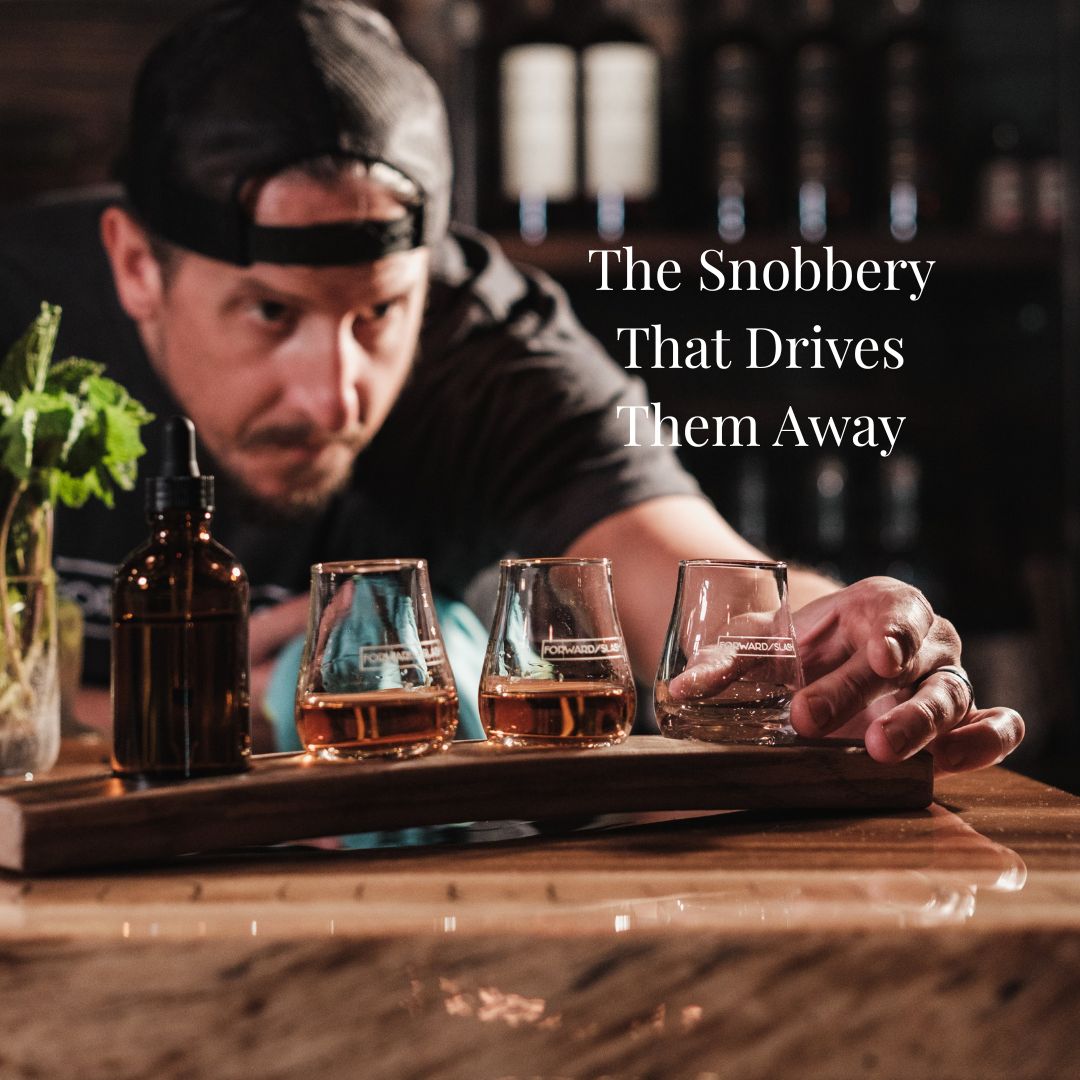
Picture the scene. A couple walks into a good mezcal bar for the first time. They are curious, a little nervous, drawn in by something they read or a bottle a friend brought to dinner. The bartender pours them something smoky and complex, and one of them wrinkles their nose and says, half-joking, that it tastes a little like a campfire. Someone two seats down at the bar snorts. Maybe they mutter something under their breath. Maybe they say it plainly: “You probably usually drink Casamigos.” The couple finishes their drinks, tips politely, and does not come back.
This happens more than anyone in the industry likes to admit. And the damage it does is slow, quiet, and compounding.
The Hierarchy Nobody Asked For
There is a pecking order baked into how serious agave spirit enthusiasts talk about what they drink, and if you have spent any time in those circles, you know exactly what it looks like. Ancestral mezcal sits at the top. Below it, artisanal. Below that, industrial mezcal. Then tequila, which many in the mezcal world treat as a lesser sibling at best and an embarrassment at worst. Below tequila, mixto. Below that, whatever you were drinking before someone corrected you.
Within each tier, there are further subdivisions. Which agave variety? Wild-harvested or cultivated? Copper pot or clay? Which state, which village, which maestro? How long did it ferment? Do you know the family? Have you visited the palenque?
None of those questions are illegitimate. They are, in fact, exactly the kinds of questions that make agave spirits one of the most interesting and substantive categories in the world. The problem is not the questions. The problem is what some people do with them.
The Lecture Dressed Up as Education
There is a difference between sharing knowledge and weaponizing it. The agave spirit world has people who do both, and the line between them is not always obvious to the person on the receiving end.
Genuine education sounds like enthusiasm. It pulls people toward something. It meets them where they are. When a knowledgeable bartender tells a new customer that the smoky character they are tasting comes from roasting the pina over wood or in an underground pit, and then offers to show them the difference by pouring something with a more herbal profile, that is education. That customer leaves knowing more and wanting more.
The lecture version of that same conversation starts with a correction. It presupposes ignorance. It draws a comparison, usually unflattering, to whatever the newcomer already knows. It ends with the listener feeling small. That customer may also leave knowing more, but they do not want more. They want to go somewhere they are not made to feel like a problem to be solved.
The internet has given this behavior enormous reach. Online communities dedicated to agave spirits can be genuinely wonderful resources, full of people willing to spend real time helping newcomers find their footing. They can also be places where a first post asking about a well-known tequila brand generates a pile of replies explaining, at length, why that question reflects poor taste. Those newcomers rarely post again.
The Economic Argument Nobody Wants to Make
Here is a tension worth sitting with. Many of the most passionate advocates for traditional agave spirits are also deeply concerned about the economic futures of the small producers they love. They worry about market access. They worry about fair pricing. They worry that major spirits companies will crowd out family operations that have been making mezcal for generations. They share information about certification fraud and about producers who sell in bulk to brands the consumer has never associated with their community.
These are real concerns. The economics of small-scale agave spirit production are genuinely precarious. A maestro mezcalero working with wild agave, a small distillation setup, and traditional methods operates with margins that leave very little room for error. They need customers. They need the category to grow in ways that reach people who are not already converts.
And yet some of the same people who voice these concerns most loudly are the ones making the category least welcoming to the very consumers who could sustain those small producers. There is a real contradiction there, and it does not resolve itself by insisting that only the right kind of consumer, with the right kind of taste and the right level of existing knowledge, deserves access to the good stuff.
Growth does not come from a fixed pool of connoisseurs trading bottles among themselves. It comes from someone who started with a mass-market margarita, got curious, tried something better, and kept going. Gatekeeping that process does not protect the category. It starves it.
The Purity Problem
Part of what drives snobbery in this space is a genuine, understandable anxiety about authenticity. Agave spirits, and mezcal in particular, have a complicated recent history. A category that was niche and obscure became fashionable quickly, and that speed brought problems. Brands positioned themselves as small and artisanal when they were not. Marketing language borrowed the vocabulary of traditional production to sell products made by industrial methods. Some of that confusion persists.
The response from serious enthusiasts was to draw harder lines. To insist on specific certifications, specific production methods, specific provenance. To be skeptical of anything that smelled like marketing. That impulse is not wrong. Informed skepticism is a reasonable response to a market that has given people real reasons to be skeptical.
But skepticism directed at producers and brands is very different from contempt directed at consumers. A person who is drinking a celebrity-backed tequila is not complicit in industry deception. They are just someone who does not yet know what you know. The appropriate response to that is not disdain. It is an invitation.
What Good Advocacy Actually Looks Like
The people who have done the most to grow genuine appreciation for agave spirits are not the most knowledgeable people in the room. They are the most generous ones. They are the bartenders who remember that they, too, once did not know the difference between a tobala and a madrecuixe. They are the collectors who get excited when a friend tries something for the first time, rather than treating that friend’s inexperience as an occasion to demonstrate superiority. They are the writers who explain things without condescending, who acknowledge that the category is complex and that complexity is a feature, not a credential requirement.
They are also, not coincidentally, the people who tend to be most effective at actually changing what consumers buy and how they think about what they are drinking. Enthusiasm is contagious. Contempt is not.
If you love these spirits, if you care about the producers who make them and the traditions that shape them, the most useful thing you can do is be the kind of person who makes someone else want to learn more. Not the kind of person who makes them feel foolish for not already knowing.
The couple at the bar was a perfect recruit. They were curious, they showed up, they were willing to try something unfamiliar. The category needs a thousand more of them. It does not need one more person ready to remind them they are doing it wrong.