
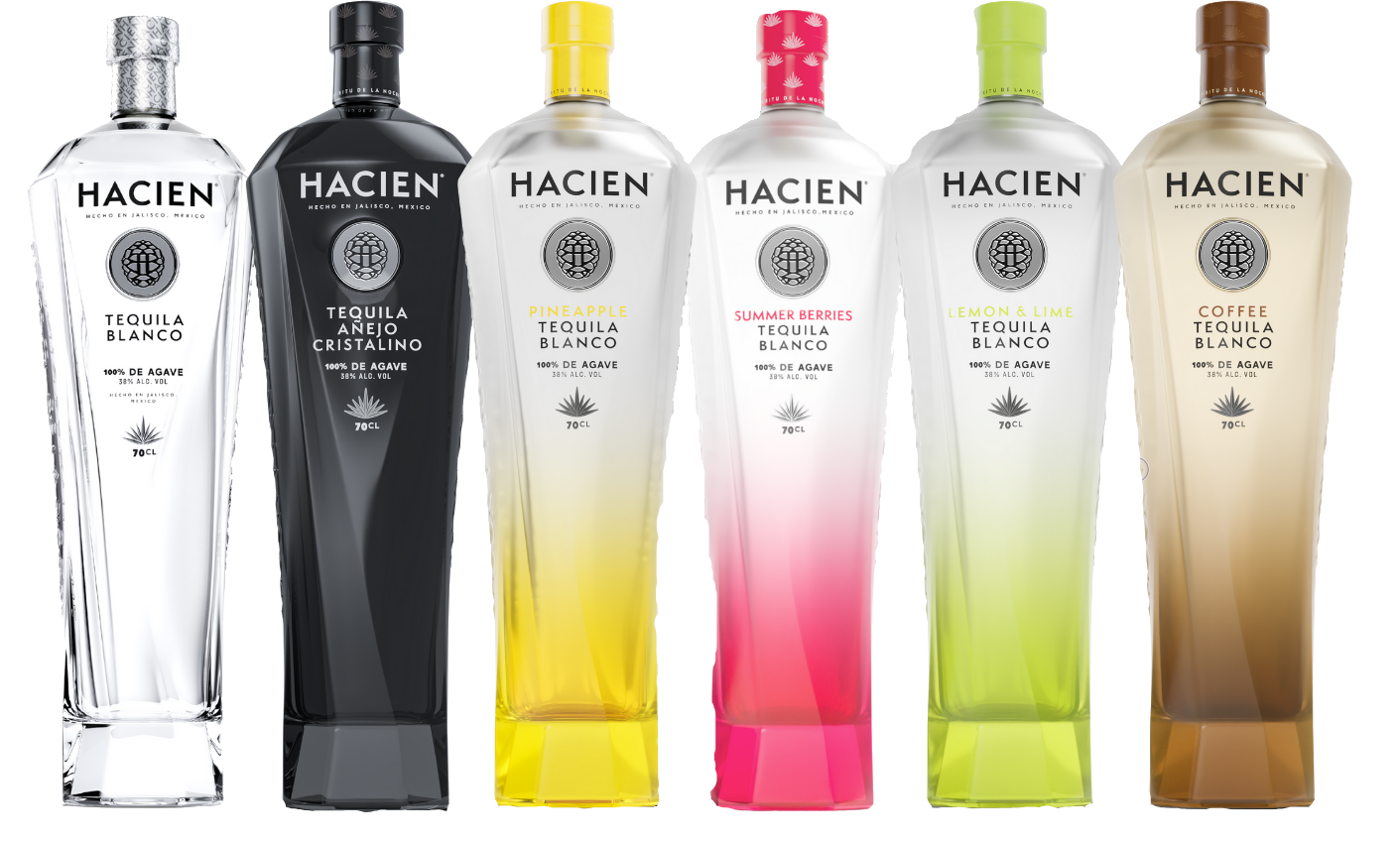
HACIEN Tequila opened a crowdfunding campaign on Republic Europe on July 6, aiming to become the UK’s leading brand in premium, 100% agave, flavoured tequila. The numbers in the pitch are genuinely strong: distribution in more than 350 UK venues including Harvey Nichols, Michelin-starred restaurants, and top 50 bars; ten-fold e-commerce growth between 2025 and 2026; medals from the Tequila & Mezcal Masters 2026; £800,000 raised to date; a confirmed listing with UAE retailer Spinneys; and a UK tequila market the brand projects will reach £1.25 billion by 2035. Founder Seb Francis frames the whole project as tequila’s answer to gin’s last decade: “flavour is going to be the fuel that drives the next decade of growth,” he says in the release, pointing to four flavoured expressions (Pineapple, Lemon & Lime, Coffee, Summer Berries) built on a 100% agave Blanco base.
That’s the pitch. Here’s the question worth asking about it: is HACIEN betting that “smooth” will do more persuasive work with UK drinkers than a NOM number would? And is that a bet the brand is right to make?
Start with who the brand is actually talking to. The UK tequila market is not, structurally, like the US mass market. It is bartender-led. British agave adoption has been built the way American mezcal adoption was built a decade earlier: menu by menu, in cocktail bars, by bartenders who function as the category’s tastemakers. London is one of the two or three most influential cocktail cities on earth, and what its bartenders decide to put on a back-bar tends to ripple out across the rest of the country. HACIEN’s own distribution list, Harvey Nichols, Michelin restaurants, top 50 bars, is a direct description of that exact audience. These are not casual drinkers reaching for a familiar name off a supermarket shelf. They are the trade professionals and educated guests who ask a bartender what they’re drinking and why, the same audience the industry has taken to calling the Informed Sipper: the segment that is, by definition, growing precisely because it wants provenance, transparency, and a NOM it can trust, even as the wider tequila category corrects.
That’s the audience getting “super-smooth 100% agave Blanco, crafted at Jalisco’s most awarded distillery.” Not named. Not numbered. The press release, HACIEN’s own website, and its product pages return to “smooth” again and again: “super-smooth” in the release, “smooth and subtle, yet full of distinctive flavour” on the Blanco product page, a customer quote about “smoothness” and “no harsh bite” placed right alongside it. What none of those pages ever supplies is the one fact that would let a bartender or a serious buyer check the story: the actual distillery, Destiladora del Valle de Tequila, S.A. de C.V., known commercially as Casa Maestri, and its NOM, 1438.
That’s not a small gap to leave open, and it isn’t hidden particularly well either. Casa Maestri is a real, respected producer in the town of Tequila that happens to describe itself in almost the identical language HACIEN borrowed for the release, calling itself “the most awarded tequila distillery in Mexico.” But Casa Maestri is not a single-family house pouring its own name into every bottle. It’s a contract distiller producing for well over 200 client brands from the same facility, alongside in-house labels of its own like Agave Boom, El Padrino, Agavales, and Identity. None of that makes HACIEN’s liquid lesser. Sharing a NOM with dozens of other brands is completely normal in this industry. But it does mean “serious distillery credentials,” the release’s own phrase, is a claim that becomes more, not less, convincing the moment you’re willing to name the distillery and print the number. HACIEN chose not to.
The timing makes that choice harder to defend as an oversight. Active class action lawsuits against Diageo’s Casamigos and Don Julio, against Cincoro, and against 818 Tequila remain unresolved in US federal court, all alleging that “100% agave” labels overstated exactly what they claimed. None of this touches HACIEN, and nothing here suggests its agave claim is false. But the litigation has permanently raised the bar for what counts as proof: CRT certification alone no longer settles the question for a buyer who’s paying attention, and the plainest way a brand demonstrates it has nothing to hide is to hand over the NOM and the distillery’s name unprompted, rather than wait to be asked. A back label in tiny type says a brand disclosed because the law made it. Leading with the number in your own marketing says you’re proud of the answer. For the exact bartender-led, provenance-hungry audience HACIEN has spent years courting into 350 UK venues, that difference is not subtle.
There’s a real irony in HACIEN reaching for the gin comparison, because gin’s own transformation in the UK was not built on soft sensory adjectives. It was built on the opposite instinct: naming the botanicals, naming the still, putting the distiller’s name on the label and the story behind it. Craft gin won over exactly the bartender-led, educated UK drinker HACIEN is now selling to by out-transparencing the big brands, not by out-“smoothing” them. If tequila really is having its gin moment, the lesson from gin is that the audience rewards the brand that shows its work.
None of this erases what HACIEN has actually built: real UK distribution, real award recognition, a real gap in premium flavoured tequila that the brand didn’t invent but did identify correctly. Investors weighing the Republic Europe listing should judge that case on its own terms. But the underlying question stands, and it’s worth putting to the brand directly rather than assuming an answer: does HACIEN think its UK trade audience, the bartenders and Michelin buyers and Harvey Nichols shoppers it’s built its whole distribution around, can’t be bothered to ask which distillery made this and what its NOM is? Because if the answer is that they can be bothered, and increasingly they can, “smooth” is not going to be the word that keeps them convinced.