
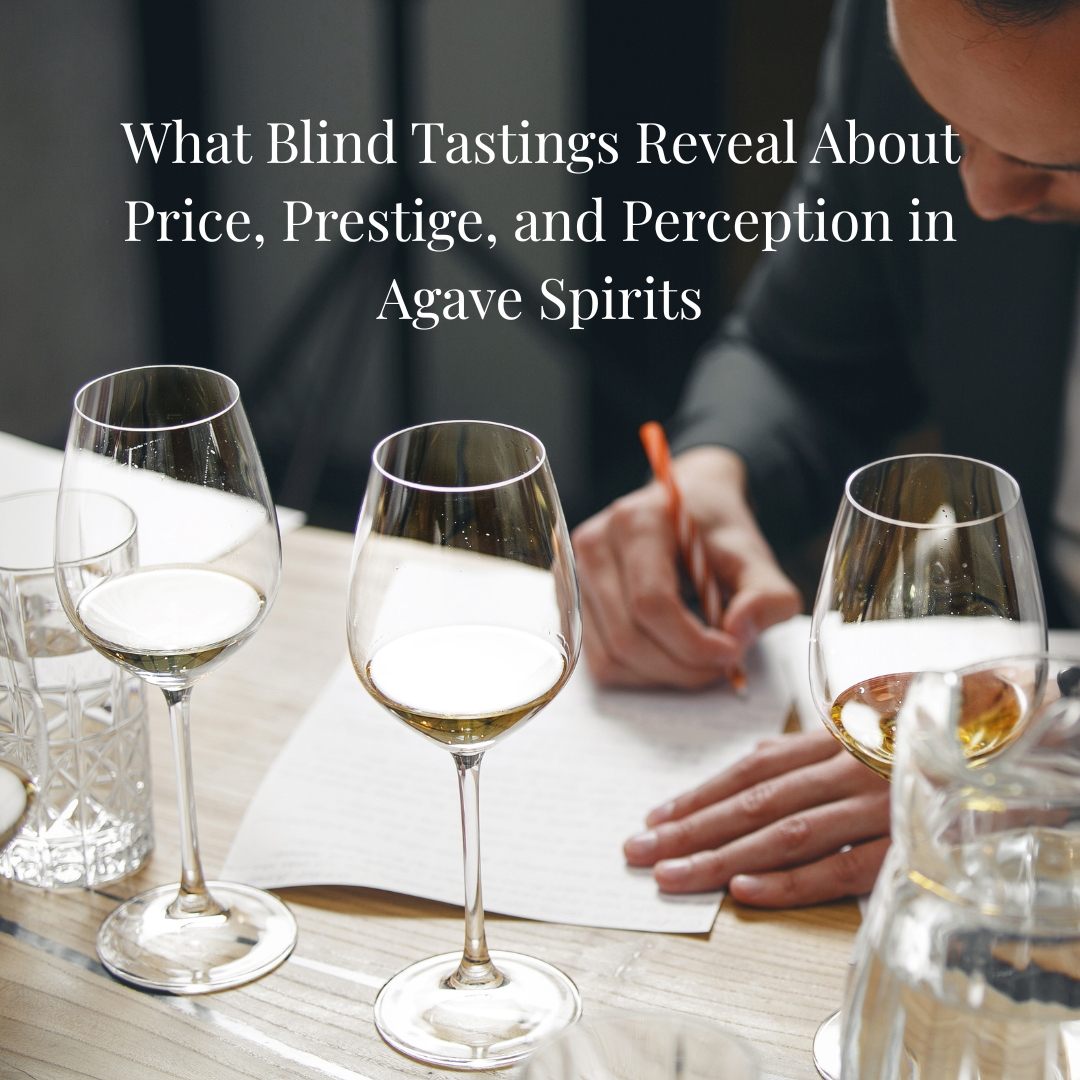
The bottle arrives at the table in a brown paper bag. The label is hidden, the price is unknown, and the story that usually travels alongside it, the one about the maestro jimador who hand-selects mature agaves by moonlight, or the third-generation distiller working in a remote canyon in Oaxaca, goes unspoken. In a blind tasting, none of that matters. Only the liquid in the glass does.
This is both the appeal and the brutality of blind evaluation. Strip away the theater and you are left with a simple, occasionally humbling question: does the spirit actually taste like what it costs? For agave spirits, a category where a single bottle can run anywhere from twelve dollars to well over five hundred, that question carries real weight.
Over the years, organized blind tastings of tequila and mezcal have produced results that are, depending on your disposition, either refreshing or deeply inconvenient. Spirits with famous names and premium price tags regularly finish in the middle of the pack. Affordable expressions from lesser-known producers sometimes land at the top. And the tasters doing the ranking, whether they are seasoned judges at a spirits competition or a group of curious enthusiasts around a kitchen table, often cannot believe their own scoresheets.
Understanding why requires looking at how perception works, and at what blind tasting can and cannot tell us.
The Anchor Problem
Pricing in the agave spirits category does not follow a simple formula. Production costs are real and variable. Growing agave is slow, between seven and thirty-five years depending on the species, and harvesting it is labor-intensive. Roasting, milling, fermentation, distillation, and aging all add cost. Tariffs and import fees stack up before a bottle ever reaches a U.S. shelf. A $90 bottle of reposado might represent genuine craft and fair wages paid at every step of the chain. Or it might represent aggressive marketing and a celebrity endorsement.
Consumers have no reliable way to distinguish between the two by looking at the bottle. And so price becomes a proxy for quality, which is a cognitive shortcut with a long track record of leading people astray.
Research in behavioral economics has documented this effect extensively. In studies where the same wine is poured twice but described at two different price points, participants consistently rate the “more expensive” pour as superior, and brain imaging data shows that pleasure centers actually activate more strongly. The experience of quality, in other words, is partly constructed by expectation. You taste the story as much as you taste the liquid.
Blind tasting interrupts that process. When price anchors are removed, tasters lose a key signal and must rely on what is actually in the glass: aroma, flavor, balance, texture, and finish.
What the Results Tend to Show
Anyone who has run or participated in a rigorous blind tasting of agave spirits will tell you the same thing: the results are messy, and that messiness is the point.
Blanco tequilas, particularly those in the $30 to $60 range, consistently punch above their weight in blind settings. This is partly because blancos are unaged, which means production quality and raw agave character have nowhere to hide. A well-made blanco from a mid-tier brand can be cleaner, more expressive, and more balanced than an ultra-premium expression that has leaned on oak or added glycerin to smooth over a mediocre base distillate.
Reposados and anejos introduce more complexity because aging in wood is itself a quality variable. The best-aged expressions show integration, where the wood enhances rather than dominates the agave. The worst use aging as a crutch, producing something that tastes more like a whiskey than a tequila. Blind tasting tends to punish the latter harder than open tasting does, because there is no prestige label there to soften the blow.
Mezcal presents its own set of blind tasting dynamics. The category’s wild diversity, in agave species, in regional production traditions, in fermentation vessels and distillation equipment, means that blind evaluators often cannot agree on what an excellent mezcal should taste like. A Tobala from Oaxaca and a Cincoano from Durango are both mezcal, but they share about as much DNA as a Burgundy Pinot Noir and an Argentine Malbec. Comparing them on a single scoresheet is reductive. The best blind mezcal tastings acknowledge this and organize expressions by species, region, or production method before evaluation begins.
One consistent finding across both categories is that very high-scoring blind spirits rarely come from the cheapest bottles, but they also rarely come from the most expensive ones. There appears to be a quality ceiling that most ultra-premium expressions do not clear, at least not reliably enough to justify the price gap. The spirits that tend to dominate blind tastings cluster in a mid-premium range where production investment is real but marketing spend has not yet overwhelmed the actual product.
The Limits of Blind Evaluation
Blind tasting is a useful tool, but it is not a perfect one, and treating it as a definitive arbiter of quality misses some important nuances.
First, context matters. A spirit that scores brilliantly in a competition flight of twenty samples may behave differently over a slow evening with food. Complexity unfolds over time. Some mezcals that seem sharp or overwhelming at first pour open into something remarkable an hour later. Competition blind tasting, which often involves rapid evaluation and palate fatigue, does not always reward the slow reveal.
Second, personal preference is not noise, it is information. One taster’s rubric prioritizes minerality and herbal character; another’s favors sweetness, fruit, and round texture. Neither is objectively correct. When blind tasting results are aggregated across diverse panels, the averaging process can advantage accessible, approachable spirits and penalize ones that are unusual, challenging, or built for a specific context. Some of the most interesting agave spirits in the world would not win a mass blind tasting precisely because they are not trying to.
Third, blind tasting cannot capture provenance, ethics, or sustainability, all of which are legitimate components of value for a growing number of consumers. A bottle produced under exploitative labor conditions with no accountability to the community around the distillery can taste excellent in a blind flight. A spirit made by a small Oaxacan family using traditional clay pot distillation, with full transparency about their practices and fair wages throughout the chain, might be less immediately crowd-pleasing but represents something worth paying more for. Blind tasting simply cannot measure that.
This does not make blind tasting useless. It makes it one tool among several, not a verdict.
What It Means for the Consumer
The practical takeaway from years of blind tasting data is less about which specific bottles to buy and more about how to approach purchasing decisions.
Prestige is not a reliable quality signal in agave spirits. A high retail price might reflect genuine production costs and craft, or it might reflect celebrity licensing fees, elaborate packaging, heavy distributor margins, and the economics of scarcity marketing. Without doing the homework to understand which is which, spending more does not reliably get you better tequila or mezcal.
Blind tasting your own collection is worth doing occasionally. Pull out several bottles, cover the labels, and pour small samples for yourself or with friends. Note what you actually taste before you look at what it is. The results tend to recalibrate expectations in productive ways and occasionally reveal that the bottle you bought for thirty dollars is outperforming the one you paid a hundred and twenty for.
At the same time, do not let blind tasting results become the only thing you care about. The story behind a spirit, where the agave was grown, who made it and under what conditions, what traditions it comes from, is genuinely valuable context. It shapes the experience of drinking it, and for many people it is inseparable from the pleasure of the spirit itself. There is nothing wrong with paying more for a bottle because you have met the producer, because you trust the sourcing, or because you want to support a specific community or production style. That is not irrational spending. That is values-aligned consumption, which is a different calculation than pure sensory quality.
What blind tasting offers is a periodic correction to the most predictable form of self-deception: the assumption that expensive automatically means good. In agave spirits, as in most things, the relationship between price and quality is real but loose, complicated, and worth interrogating. The brown paper bag is not the enemy of a great drinking experience. Sometimes it is the beginning of one.